Showing posts with label Prime Minister. Show all posts
03 October 2017
Former Iraqi President Talabani Dead at 83
Former Iraqi President and Iraqi Kurdish leader Jalal Talabani has died in a Berlin hospital at age 83, according to Kurdish officials.
Talabani formerly led one of the largest Kurdish factions in Iraq before the 2003 U.S.-led invasion led to the ouster of Saddam Hussein. He then took over as Iraq’s president from 2005 to 2014, before stepping down to deal with complications from a stroke he suffered in 2012.
He was Iraq’s first non-Arab president. He was seen as a unifying figure within Iraq.
Talabani's death comes days after the Iraqi Kurdistan Regional Government held an independence referendum over Iraqi government objections.
(Photo by Khamenei.ir. Jalal Talabani meet with Ali Khamenei. 22 November 2005.)
28 March 2015
World Leaders in Singapore Sunday for Lee's Funeral
by Steve Herman
Dozens of world leaders will be in Singapore on Sunday for the state funeral of the small country's first prime minister, Lee Kuan Yew. Lee was greatly admired in the region where other leaders sought to emulate him and replicate his success.
In Bangkok, Beijing, Jakarta and other Asian capitals, Lee Kuan Yew served as a role model for leaders hoping to reproduce the magic that took Singapore from a colonial backwater to one of the world's most prosperous and efficient nations.
One of his many such admirers: former Thai prime minister Anand Panyarachun, who says as a Southeast Asian, he feels “a great sense of loss.”
“His wisdom, his advice, his insight have always been sought by leaders of other nations,” he said.
Autocrats envied the well-educated pragmatist's ability to maintain a one-party government in a nanny state that eschewed liberalism, except for economic policies.
Curtis Chin, a former U.S. ambassador to the Asian Development Bank, says many of Mr. Lee's less successful fellow leaders in the region failed to absorb his most important lessons.
“So when we think about what others can learn from Lee Kwan Yew they may be citing some things," he said. "But unfortunately too many leaders of Asia today have not learned about the rule of law, the good governance, the accountability, the battle against corruption that Lee Kwan Yew also was all about.”
Lee rejected the notion of an “Asian model” for development but articulated Asian values which, in his eyes, made individual rights subservient to collective security and growth.
Thus it is no surprise that over the decades many of China's leaders expressed admiration for the rapid transformation of Singapore under the leadership of Lee, an ethnic Hakka Chinese.
Lee made “historical contributions to the bilateral relationship” between Beijing and Singapore, says China's Foreign Ministry spokesman Hong Lei.
“Mr. Lee Kuan Yew is a uniquely influential statesman in Asia. And he is also a strategist embodying oriental values and international vision,” said Hong Lei.
The official delegation from the United States will be led by former president Bill Clinton and will include former secretary of state Henry Kissinger, a contemporary of Lee's, who said the Singaporean leader was a "close personal friend, a fact that I consider one of the great blessings of my life."
Labels:
1959,
1990,
91,
Kuan,
Lee,
Lee Kuan Yew,
pneumonia,
politician,
Prime Minister,
Singaporean,
Yew
14 January 2014
Dignitaries Praise Ariel Sharon at Funeral
by Scott Bobb
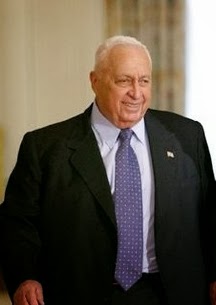
Israel's former Prime Minister Ariel Sharon has been buried at his home in the Negev before family, friends and a delegation of visiting dignitaries, following civilian and military services.
He was praised earlier in the day during a memorial service at the Knesset - the Israeli parliament - by Israeli and foreign dignitaries.
Israel's president, Shimon Peres, called him an exceptional soldier who knew how to win.
Peres said rest, great leader, who did not allow himself to rest when serving his people, defending his country and making its fields blossom.
Prime Minister Benjamin Netanyahu said although he and Sharon did not always agree when in government together they cooperated for the security and economy of the country.
He added that Sharon was a practical and pragmatic man whose pragmatism was full of deep feelings for his country and the Jewish people.
Sharon died Saturday at the age of 85. He had been in a coma for eight years after suffering a stroke while prime minister.
A veteran of four Arab-Israeli wars from 1948 to 1973, he was an independent commander who entered politics after his military career ended.
He was revered by some Israelis and criticized by others. He was generally condemned by Palestinians for his tough military tactics and offensives in which hundreds of Palestinians were killed.
U.S. Vice President Joe Biden said like all real leaders Sharon had a north star that guided him.
"His north star was the survival of the state of Israel and the Jewish people wherever they resided," he said.
Britain's former Prime Minister Tony Blair agreed, saying Sharon never wavered from this strategic objective.
"The state which from the age of 14 he fought to bring into being had to be protected for future generations. When that meant fighting, he fought. When that meant making peace, he sought peace. And the same iron determination he took to the field of war, he took to the chamber of diplomacy," said Blair.
Security was tightened in southern Israel prior to Sharon's burial at his ranch some 10 kilometers east of the Gaza Strip. The anti-rocket defense system, called Iron Dome, was deployed in the area amid reports of rocket firing.
Sharon, while prime minister in 2005, ordered an Israeli military operation in Gaza in which more than 1,000 Palestinians and 13 Israelis were killed.
He subsequently ordered the unilateral withdrawal of Israeli soldiers and settlers from Gaza.
A long-time member of the conservative Likud party, he broke away to form the centrist Kadima party the same year. He called elections for March 2006 but suffered the stroke two months before they were held.
Labels:
1981,
1983,
2001,
2006,
85,
Ariel,
Ariel Sharon,
general,
heart failure,
Israeli,
Minister of Defense,
Prime Minister,
Sharon,
statesman
11 January 2014
Israel's Sharon Dies at 85
by Luis Ramirez
Former Israeli Prime Minister Ariel Sharon has died from complications associated with a massive stroke he suffered eight years ago. He was 85.
Israeli news reports say Sharon died Saturday at a hospital near Tel Aviv.
Sharon served as prime minister from 2001 until 2006, when a stroke left him hospitalized and in a coma.
A week ago, medical officials said his kidneys and other vital organs had begun to fail.
As a soldier, Sharon was known for his daring heroics on the battlefield in the decades following the creation of the State of Israel, most notably during the Yom Kippur War of 1973. In a brilliant tactical display, he led Israeli troops across the Suez Canal, cutting off Egypt's third army.
He was also known to many for being reckless and brutal. In 1982, he led an invasion of Lebanon that resulted in the massacre, by Lebanese militias, of hundreds of Palestinians at the Sabra and Shatila refugee camps in Beirut.
Dennis Ross, a former U.S. Middle East negotiator, says the military shaped Sharon.
"He certainly came to believe that the only way peace would be possible would be for Israeli strength to be respected." he said.
As a politician, Sharon was also controversial. As a cabinet member, he promoted the establishment of Jewish settlements throughout the Palestinian territories.
Palestinian scholar Shukri Abed says this won him further hatred among Arabs.
"To say the least, not trusted, and probably hated by many of them, because of his strong positions, because he was an advocate of building settlements," Abed said. "He was the father of building settlements."
As head of the opposition in 2000, Sharon's visit to the Temple Mount, or Haram al-Sharif, in Jerusalem sparked anger among the Palestinians and triggered the uprising known as the Second Intifada.
He became prime minister in 2001.
His government suppressed the uprising within a few years, and began work on the security barrier that now separates Israelis from Palestinians.
While Sharon is remembered as a tough leader who spared no action to defend his people, he was also one who could take difficult steps.
In 2005, he oversaw Israel's withdrawal from the Gaza Strip, pulling Israeli settlers and soldiers out of the enclave in the hopes of achieving peace with the Palestinians.
"The relocation of the settlements will be in order to draw an efficient security line that will create a disengagement line between Israel and the Palestinians," Sharon said at the time.
He left the hawkish Likud party to form the centrist Kadima party which subsequently engaged in intense but unsuccessful peace talks with the Palestinians, aimed at establishing a separate Palestinian state.
In 2006, Sharon suffered a series of strokes and slipped into a coma. He was replaced by Ehud Olmert as prime minister.
In a vegetative state, the former prime minister spent the next few years at a hospital near Tel Aviv before being transferred to home care at his ranch in southern Israel.
Sharon dedicated his life to building a strong Israel. His efforts to bring peace remain a work in progress.
Israel's current prime minister, Benjamin Netanyahu, said there is "deep sorrow" in the Jewish state over Sharon's death. Sharon says the former leader will live forever in the nation's heart.
Omri Ceren is a senior adviser at The Israel Project, a pro-Israel nonprofit group in Washington. He told VOA Sharon is a figure of "overarching importance" in Israel's history for his role in reshaping the country's civil and military sectors.
"Sharon was both a military hero - at times, arguably one of the country's greatest military heroes in the aftermath of particular wars - but also a political giant," Ceren said. "He, in the military context, was thought to have been critical to winning - to literally, quite literally, winning - entire theaters during wars like the Yom Kippur War, the 1973 war. And politically, he quite literally redrew Israel's electoral map."
Labels:
1981,
1983,
2001,
2006,
85,
Ariel,
Ariel Sharon,
general,
heart failure,
Israeli,
Minister of Defense,
Prime Minister,
Sharon,
statesman
18 April 2013
Britain Says Goodbye to Former PM Thatcher
by Al Pessin
Queen Elizabeth II and dignitaries from around the world attended the funeral of former British Prime Minister Margaret Thatcher in London. Thatcher, 87, died last week.
Her casket was carried on a horse-drawn gun carriage through the center of London, as people crowded the sidewalks to pay their respects.
It was escorted by military units, and all along the route security was even tighter than originally planned because of Monday’s Boston Marathon bombings.
There were some protests, but there were no serious incidents.
Inside St. Paul’s Cathedral, the casket lay in front of more than 2,000 mourners. The current Prime Minister David Cameron was there, as were leaders and former leaders from around the world. But there was no official from Argentina, which Thatcher defeated in the 1982 Falkland Islands War.
It was a prayer service, with no formal eulogy. But the Bishop of London, Richard Chartres, gave a brief address, saying, "After the storm of a life lived in the heat of political controversy, there is a great calm. ... Lying here, she is one of us, subject to the common destiny of all human beings.”
Margaret Thatcher was Britain’s only female prime minister, and the longest serving of the 20th Century, holding the office for 11 years. Her passionately conservative policies transformed the country, and ignited strong emotions both in favor and opposed, feelings that have been on display again during the past week, even though she left office 23 years ago.
And that, in the end, is testament to the impact of her life.
(Photo by Minoritenplatz8/Martin451)
Labels:
1959,
1979,
1990,
1992,
87,
british,
Finchley,
life peer,
Margaret,
Margaret Thatcher,
MP,
politician,
Prime Minister,
stroke,
Thatcher
09 April 2013
Britain's Thatcher to be Buried April 17
Britain has announced that the funeral for former British prime minister Margaret Thatcher will take place next Wednesday, April 17.
The government has said Thatcher would receive a ceremonial funeral at St. Paul's Cathedral with military honors - a step short of a state funeral - in accordance with the wishes of her family. It said a private cremation would follow later.
The former British prime minister died Monday at the age of 87 following a stroke. The outspoken Thatcher led the Conservative Party to three election victories from 1979 to 1990, the longest continuous period in office by a British prime minister since the early 19th century.
U.S. President Barack Obama and other leaders around the world have have paying tribute to Thatcher, known was the "Iron Lady" for her personal and political toughness.
Thatcher was a stern conservative who broke the power of British unions, eliminated many government subsidies and enabled a far greater role for private enterprise.
She led Britain through its 1982 war with Argentina over the Falkland Islands, strongly opposed European integration and built a close "special relationship" with U.S. President Ronald Reagan that some people claim helped spur the downfall of Soviet communism.
Labels:
1959,
1979,
1990,
1992,
87,
british,
Finchley,
life peer,
Margaret,
Margaret Thatcher,
MP,
politician,
Prime Minister,
stroke,
Thatcher
Tributes to Margaret Thatcher Pour In
Reaction to the death of former British Prime Minister Margaret Thatcher is coming in from around the world.
U.S. President Barack Obama said in a statement, "The world has lost one of the great champions of freedom and liberty."
European Union Commission President Jose Manuel Barroso recalled her contributions to a more stable Europe.
"She was without doubt a great stateswoman, the first female prime minister of her country, and a circumspect yet engaged player in the European Union. She will be remembered both for her contributions and her reserves to our common project," said Barroso.
Former French president Valerie Giscard d'Estaing remembered Thatcher as a leader who always put her country first.
"She was not interested in the structure of the system, not very much in the future of the system, she was interested in the position of Britain in Europe and she protected it as best as she could," said d'Estaing.
Israeli President Shimon Peres called her exceptional. "I had the highest regard and admiration for the way she combined leaders and ideas to create a new situation."
United Nations Secretary-General Ban Ki-moon said the world will miss her great leadership, calling her a "pioneer" for her contributions to peace and security during the height of the cold war. He also praised Thatcher for giving great hope to women for gender equality in politics.
Former Soviet president Mikhail Gorbachev said Thatcher was a "great politician" whose words "carried great weight." The Nobel Peace Prize winner, who held frequent meetings with Thatcher at the end of the Cold War, called her death "sad news."
Other world leaders also are offering praise, including Spanish Prime Minister Mariano Rajoy, who said today's leaders would do well to learn from her.
"Her unbreakable commitment to freedom, democracy and the state of law, as well as her firm reformist determination, are an invaluable legacy for European current leaders who, just like it happened in the 80's when Margaret Thatcher ruled, face now very complex challenges that require big doses of political ambition and courage," said Rajoy.
Labels:
1959,
1979,
1990,
1992,
87,
british,
Finchley,
life peer,
Margaret,
Margaret Thatcher,
MP,
politician,
Prime Minister,
stroke,
Thatcher
Britain's 'Iron Lady' Dead at 87
by Al Pessin
Former British Prime Minister Margaret Thatcher has died at the age of 87, following a stroke.
Family spokesman Lord Tim Bell said Britain's only female prime minister died peacefully on Monday morning. Within minutes of the announcement, ordinary citizens began to put flowers and condolence notes outside her home in London.
The British government said Thatcher would receive a ceremonial funeral at St. Paul's Cathedral with military honors - a step short of a state funeral - in accordance with the wishes of her family. It said a private cremation would follow later, but provided no details on the timing of the service.
Thatcher, who was made a baroness by Queen Elizabeth, had a long and controversial career, transforming the British economy and society with her Conservative Party’s anti-union, anti-regulation policies during an 11-year tenure from 1979 to 1990.
She was a grocer’s daughter who rose to become Britain’s only woman prime minister, and she held the job longer than anyone else in the 20th Century. When she first came to office, she expressed this hope.
“Where there is discord may we bring harmony, where there is error may we bring truth, where there is doubt may we bring faith and where there is despair may we bring hope,” she said.
But her tenure through three election victories created considerable discord, alienating workers, deregulating health and safety hazards, and splitting her own Cabinet on some issues. She stood firm against militants in Northern Ireland, allowing one of them to starve himself to death in prison.
She supported British membership in the European Union, but insisted on not participating in the open borders agreement and the common euro currency. And she took the country to war with Argentina over the Falkland Islands.
Dignitaries react
On Monday, Queen Elizabeth expressed sadness at Mrs. Thatcher’s death, and approved plans for a ceremonial funeral with full military honors and a procession across London to St. Paul’s Cathedral.
Prime Minister David Cameron, also a Conservative, cut short a visit to Spain and France following the news. He said Monday his country had "lost a great leader, a great prime minister and a great Briton."
Cameron said “she did not just lead our country, she saved our country,” and said she will go down in history as “the greatest British peacetime prime minister.”
European Commission head Jose Manuel Barroso paid tribute Monday to her "contributions" to the growth of the EU, despite her reservations about its merits.
Former Soviet president Mikhail Gorbachev said Thatcher was a "great politician" whose words "carried great weight." The Nobel Peace Prize winner, who held frequent meetings with Thatcher at the end of the Cold War, called her death "sad news."
U.S. President Barack Obama said “the world has lost one of the great champions of freedom and liberty, and America has lost a true friend.”
Within minutes of the announcement, ordinary citizens began to put flowers and condolence notes outside her home in London. Throughout the city, people were hearing the news as they went out for lunch.
“It is a terrible loss for the UK, but also I think all around the world really," said one citizen. "I think she was an inspirational woman, and I think there will be lots of people affected by this.”
“She took some difficult decisions, was not afraid to put people’s noses out of joint," said another. "And I think a lot of people on both sides of the political spectrum respected her for that.”
“I do not think she did more harm than good. I think she did what could with what she had, like most people do. And it was a hard job to do, I would say, especially being a woman,” another citizen added.
Mrs. Thatcher’s supporters and opponents agree that she had a huge impact on Britain, as a pioneering woman in politics and as a transformational prime minister. As with any politician, her legacy will be mixed, but all appear to agree she earned her nickname, the Iron Lady.
Changed British politics
Thatcher, who is credited with changing the face of British politics during her three terms as Prime Minister, was married to Denis Thatcher and had two children, a son and daughter - twins.
In her autobiography, Thatcher said her foremost achievement, as prime minister, was to shift British policy from what she called soft socialism to a free-enterprise society.
Five years after leaving office, she told a television interviewer she had also restored Britain's high rank in the world because of her unwavering stand for freedom and liberty. She recalled her decision to send British troops to defend the Falkland Islands in 1982 when Argentine forces invaded the British dependency.
"People knew that we would not tolerate an aggressor. We would not appease an aggressor. So we went down to the Falklands," she recalled. "That was the first time an aggressor had been thrown out in the post war period. So we did turn Britain around to become a great nation again although within much smaller borders in a way because we no longer have an empire. But we got back our self-respect and our reputation."
The same could be said for her condemnation of Iraq's invasion of Kuwait in 1990. Standing next to then U.S. President George Bush at a meeting in the United States, Thatcher did not hesitate to call for military action if necessary to stop Iraqi leader Saddam Hussein.
Thatcher studied research chemistry and law but soon switched to politics. Margaret Thatcher served as secretary of state for education and science in the 1970s. She quickly rose through Conservative party ranks and became leader of the opposition in Parliament in 1975. She was elected prime minister in 1979.
Thatcher's leadership was controversial at the time. She cut the power of the labor unions, reduced public spending, privatized state-run companies, and moved her centrist Conservative Party farther to the political right.
She never hid her hostility toward the European Union's design for closer economic and political cooperation. Thatcher warned it would rob Britain of its sovereignty.
As the only woman EU leader at the time, Thatcher's trademark became the black handbag she always carried on her arm. Her blunt style and sharp tongue were described as "handbagging."
The term became synonymous with Thatcher tirades against EU leaders trying to forge closer unity.
"You can't just have precisely the kind of leader that you would like. It's a choice between what's on offer," she noted. "Doubtless there were many people for whom I was not the ideal leader, particularly those who wanted to go into Europe much more deeply than I did."
Despite the criticism, the tenacious Margaret Thatcher won landslide victories for second and third terms in office. But her deliberate move to the political right angered many within her own party.
She was ousted as party leader and prime minister in 1990. Thatcher was later made a baroness and appointed to the House of Lords.
In a 1996 speech, Thatcher blamed her party's loss of popularity on a new leadership that she said had betrayed her principles. What works she insisted, is free enterprise, not big government.
She did not hesitate to offer advice to her successor, John Major, as he battled unsuccessfully to keep the Conservative Party in power.
"Never give up power voluntarily," she advised. "If you believe in your message you want to win because you know the message in your hands is likely to be very much more effectively administered than people who now say they agree with it but who never have thought of it in the first place."
Ironically, it was a newly fashioned Labour Party that dumped its socialist rhetoric and adopted the Thatcher strategy to win power in 1997 and put the Conservative Party back in the opposition.
Thatcher refused to sit quietly in the background even in her final years. She was a tireless campaigner for conservative candidates around the country and never hesitated to offer advice and support to the next generation of Conservative Party leaders.
Labels:
1959,
1979,
1990,
1992,
87,
british,
Finchley,
life peer,
Margaret,
Margaret Thatcher,
MP,
politician,
Prime Minister,
stroke,
Thatcher
20 October 2012
Former Cambodian King's Body Arrives in Phnom Penh
by Irwin Loy
Tens of thousands of mourners packed the streets of the nation's capital as the body of Cambodia's former king, Norodom Sihanouk, was flown home Wednesday from China where he died Monday of cancer at age 89.
Eight years after he gave up his throne to his son, Sihanouk is still called the father of the nation by many Cambodians.
Outside Phnom Penh’s main airport, thousands of white-clad mourners waited in searing heat to catch once last glimpse of the man known as "King-Father" as his golden casket, placed in a golden carriage fashioned in the shape of a swan, made one last journey to the Royal Palace where his body will lie in state for three months.
Poun Pon, a 67-year-old who journeyed from her rural home to say goodbye to a man she still calls "King," said she felt shock at hearing the of his death.
Also lining the 14-kilometer route, Long Kea, 72, only expressed a deep sorrow. "That's why I come to join his procession," said Kea. "It is all I could do."
"He struggled all his life and the country gained independence because of him," said Chhuong Chy, a popular comedian who also happened to be among the masses. "So as a son or grandson, I have been waiting for him, because I want to welcome him for the last time."
Mixed legacy
Some brought their young children to watch the mournful procession, wanting them to know the highly revered former monarch, who came to the throne in 1941 and ruled Cambodia off and on for more than 60 years, was much more than just grainy images on a television screen.
Although Sihanouk remains a hero to many Cambodians, he also leaves a mixed historical legacy. Unable to safely navigate the Cold War politics that engulfed his country, he sided with Khmer Rouge rebels who would later devastate his homeland and ultimately be blamed for the deaths of some 1.7 million Cambodians.
Yet for those who came of age during Sihanouk’s golden years of the 1950s and '60s, he is heralded for bringing his ancient kingdom through independence from France, war and genocide to form a fragile democracy.
Sihanouk’s return begins a week-long period of official mourning, during which the Cambodian flag will fly at half-mast and all entertainment is prohibited.
In 2004, Sihanouk abdicated the throne to his son, Norodom Sihamoni, citing old age and health concerns.
(Photo: Meeting in Beijing in 1956: from left Mao Zedong, Peng Zhen, Sihanouk, Liu Shaoqi.)
Labels:
1941,
1955,
1993,
2004,
89,
Cambodia,
Cambodian,
East Asia Pacific,
heart attack,
King,
Norodom Sihanouk,
obit,
Prime Minister,
royal,
Sihanouk
18 October 2012
Cambodians Mourn Revered ex-King Sihanouk
Cambodians entered a second day of mourning Tuesday for their revered former king Norodom Sihanouk, as preparations were made to return his body from China.
Tearful mourners placed a small wreath outside the royal palace in the Cambodian capital and offered prayers for the man they called "King-Father."
Thirty-two-year-old monk Try Piseth said Kmer the former king's death is a major blow. “What he did was purely for the nation and religion, and I am so deeply sorry to lose him. I am so speechless and cannot do much but to wish him rest in peace,” said Piseth.
Phnom Penh resident Chhun Chenda said all she can do now is mourn as she waits for the kings body to come back. “I love my king. I want him to continue to reign," said Chenda. "I want him to stay in our country forever.”
Norodom Sihanouk died of a heart attack in Beijing Monday at age 89 following a long battle with cancer. His son, King Norodom Sihamoni, and Prime Minister Hun Sen are in Beijing and are scheduled to escort the former king's body back to Cambodia Wednesday.
Even in death, the "King-Father" gets royal treatment. Sihanouk's body will be transported in a gold coffin and, once back, he will lie in state at the royal palace for three months before being cremated at a traditional Buddhist ceremony.
In a letter to the former king's widow, Monineath Sihanouk, and the current king, Prime Minister Hun Sen called the former king an “incomparable eminent figure.” The premier also tried to reassure Cambodians, saying he would remain dedicated to Cambodia’s “independence, integrity and…national unification.”
Chinese Premier Wen Jiabao was among those who paid respects to Sihanouk Tuesday, calling him an "old friend of the Chinese people."
Other condolence messages continued to pour in from around the world. The United States, which helped topple Sihanouk in a Washington-backed 1970 coup, offered condolences in a brief State Department memo.
North Korea, whose founder Kim Il Sung was close with Sihanouk, on Tuesday praised the former leader's "unprecedented" friendship with Pyongyang.
Sihanouk came to the throne in 1941 and went on to rule Cambodia off and on for more than 60 years.
He was heralded for bringing his ancient kingdom through independence from France, war and genocide to form a fragile democracy. But Sihanouk's name is also still soiled from his association with the Khmer Rouge movement, blamed for the deaths of some 1.7 million Cambodians.
Sihanouk abdicated the throne to his son, Norodom Sihamoni, in 2004 citing old age and health concerns.
(Photo: Billboard of King Norodom Sihanouk at Angkor International Airport.)
Labels:
1941,
1955,
1993,
2004,
89,
Cambodia,
Cambodian,
East Asia Pacific,
heart attack,
King,
Norodom Sihanouk,
obit,
Prime Minister,
royal,
Sihanouk
Cambodia Mourns Former King Who Shaped Decades of History
by Irwin Loy
Cambodians awoke Monday to the news that their country’s revered former king, Norodom Sihanouk, died overnight in Beijing. The 89-year-old leaves behind a colorful but tumultuous legacy. To many Cambodians who mourned his death Monday, he will forever be remembered as the father of a nation.
Sihanouk’s death came amid one of the country’s most important religious festivals, Pchum Ben, when Cambodians pay respect to their ancestors.
At a pagoda in the capital, monks chanted while people made symbolic offerings of food to deceased relatives. Kong Sidoeun waited while his elderly mother prayed. He says the death of the man known to Cambodians as the "King-Father", came as a shock to his entire family.
“I feel shock, and unbelievable … our King-Father passed away. It’s very, very sad. I read this information to my family, and my family, my mother, my relative very shocked,” he said.
For half a century, Cambodia’s history was intertwined with Sihanouk’s. He led the country to independence from France in 1953. But his public support of the Khmer Rouge, following the 1970 coup that unseated him, also bolstered support for the communist movement that would devastate the country five years later.
Still, Sihanouk remains revered by many here. That is particularly true among older Cambodians, who associate him with the country’s post-independence years.
“I heard from my father, my mother and also I observed from the people, nationwide, they think during his period, under his control, the country is very developed. People live with safety during that time," Sidoeun stated. "It mean that in the region, Cambodia is one of developed countries at that time so it’s a very good achievement.”
At some government buildings in the capital, flags were flown at half-mast. Local television stations aired tributes to Cambodia’s former king. Minister of Information Khieu Kanharith says Sihanouk ushered his nation into the modern world.
“You know, when I was a young one. I used to quote his work. Now when I am old, the relationship is more than personal … It’s a great loss for the whole country,” Kanharith added.
Kanharith says officials are making preparations for a royal funeral. Sihanouk’s son and the current monarch, King Norodom Sihamoni, flew to Beijing, along with Prime Minister Hun Sen, to repatriate the King-Father’s remains.
Labels:
1941,
1955,
1993,
2004,
89,
Cambodia,
Cambodian,
East Asia Pacific,
heart attack,
King,
Norodom Sihanouk,
obit,
Prime Minister,
royal,
Sihanouk
16 October 2012
Former Cambodian King Norodom Sihanouk Dies
Former Cambodian king, Norodom Sihanouk, has died at the age of 89.
Cambodian government officials say the former leader died of natural causes early Monday , in Beijing, where he was receiving medical treatment.
Sihanouk came to the throne in 1941 and went on to rule Cambodia off and on more than 60 years.
Sihanouk was heralded for bringing his ancient kingdom through independence from France, war and genocide to form a fragile democracy.
During the Vietnam War, Sihanouk was briefly overthrown by a military coup while travelling overseas.
In an effort to return to power, he aligned himself with the radical communist group, the Khmer Rouge. But by 1976 was sidelined by them and in fear of his life.
The Khmer Rouge remained in power until 1979, but Sihanouk's name remained soiled from his association with the movement that resulted in the deaths of some 1.7 million Cambodians.
He returned from exile in 1991 and regained the throne in 1993 and went on to become a central figure in the country's development.
Sihanouk abdicated the throne to his son, Norodom Sihamoni, in 2004 citing old age and health concerns.
Labels:
1941,
1955,
1993,
2004,
89,
Cambodia,
Cambodian,
East Asia Pacific,
heart attack,
King,
Norodom Sihanouk,
obit,
Prime Minister,
royal,
Sihanouk
21 August 2012
Ethiopian Leader Meles Dies at 57
Ethiopian Prime Minister Meles Zenawi has died at the age of 57, after months of speculation about his health.
State television announced his death Tuesday, saying he died from a sudden infection late Monday at a hospital abroad.
Government spokesman Bereket Simon would not say where Mr. Meles died, or disclose the illness that led to his hospitalization.
“The prime minister had been sick for quite a while,” he said. “And he was attending medical support in, somewhere in, ah, abroad. And he had some chance in recuperating. But ultimately some infection happened to him and doctors couldn't control that infection.”
Mr. Meles had not been seen in public for nearly two months before his death.
Spokesman Bereket said Deputy Prime Minister Hailemariam Desalegn will serve as acting prime minister.
He said Mr. Meles' body will arrive Tuesday in Ethiopia, and officials are making plans for the funeral.
Prime Minister Meles ruled his country for more than 20 years, after the rebel alliance he led, the EPRDF (Ethiopian People's Revolutionary Democratic Front), seized power in 1991.
Mr. Meles earned praise abroad for improvements in the economy, education and health care. But human rights groups sharply criticized him for various abuses, including restrictions on independent media.
Under Mr. Meles, Ethiopia fought a border war with Eritrea and sent troops to Somalia to fight Islamist militants.
Ethiopia and Eritrea fought from 1998 to 2000 in a conflict that killed more than 70,000 people. Tension between the two countries remained high.
Mr. Meles was also known as an ally to the United States against terrorism.
In 2006, Ethiopian troops entered Somalia to fight Islamist militants allegedly armed and trained by the Eritrean government. Ethiopian forces returned to Somalia last year in a multi-nation offensive against militant group al-Shabab.
Mr. Meles' most serious political challenge came in the 2005 elections, when opposition parties said the government rigged to results to cheat them of victory. Nearly 200 people died in post-election violence and protests.
In the most recent elections in 2010, the EPRDF and its allies took all but one seat in parliament, sparking new accusations of fraud.
The criticism increased in recent years as Ethiopian courts jailed journalists and political activists under an anti-terrorism law that rights groups said was overly vague and broad.
Mr. Meles was born in the northern Ethiopian town of Adwa in 1955. He attended Addis Ababa University for two years before joining the Tigrayan Peoples' Liberation Front, or TPLF, one of several groups that was fighting the government of Mengistu Hailemariam. The TPLF later became the core group within the EPRDF.
After taking power in 1991, Mr. Meles served as president for four years before assuming the prime minister's post in 1995.
(Photo by Monika Flueckiger, 2012.)
Labels:
1991,
1995,
57,
Africa,
Ethiopian,
Meles,
Meles Zenawi,
obit,
politician,
President,
Prime Minister,
Zenawi
19 May 2011
Former Irish PM Dies at 85
![]() |
| Garret FitzGerald arriving for The Lisbon Treaty Count, 3 October 2009 (Photo: William Murphy) |
Thursday, 19 May 2011
Former Irish Prime Minister Garret Fitzgerald has died in Dublin at the age of 85.
Mr. Fitzgerald served twice as prime minister. He is credited with organizing the framework for peace in Northern Ireland while improving Irish-British relations.
He also served as Ireland's foreign minister before retiring from politics in 1992.
Mr. Fitzgerald died one day after Britain's Queen Elizabeth's visit to Dublin. Queen Elizabeth offered her deep sympathy to all those who have suffered as a consequence of Ireland and Britain's troubled past.
Labels:
85,
dies,
Europe,
Fitzgerald,
Garret,
Garret Fitzgerald,
Irish,
obit,
PM,
Prime Minister
Subscribe to:
Posts (Atom)