Showing posts with label 85. Show all posts

11 June 2015

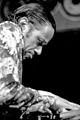
Jazz Icon Ornette Coleman Dies at 85


http://post-humous.blogspot.com/2015/06/jazz-icon-ornette-coleman-dies-at-85.html
by Diaa Bekheet

Legendary saxophonist and composer Ornette Coleman died in Manhattan Thursday morning at the age of 85. His publicist declined to give further details about the cause of death but some media reports say the icon of "Free Jazz" died of cardiac arrest.

Coleman's album "Change of the Century" ushered in a new jazz style in the late 1950s, that later became known as “Free Jazz” - featuring songs that break the traditional rules of melody allowing musicians more latitude to go beyond the limitations of bebop and modal jazz.

The world first learned of Free Jazz in 1959 when the alto saxophonist  walked into a Hollywood music studio with bassist Charlie Haden, drummer Billy Higgins and pocket trumpeter Don Cherry. The quartet recorded "Change of the Century," which produced its most famous song: “Ramblin.”

For the Coleman quartet, it was all exciting, new music. They didn’t want to sound like other traditional jazz players of the time, and sought a greater sense of freedom. Coleman considered sound an invisible emotion combining various moods.

His first album, "The Shape of Jazz to Come," laid the foundation for “Free Jazz.” Many musicians and jazz lovers alike were shocked that the songs had no recognizable chord structure but contained free-style simultaneous improvisation.

“Ornette shocked the American jazz world," says jazz writer Howard Mandell. “Here was somebody who was completely upsetting the apple cart.  And pissing off Mingus and Max Roach – who, I think – they believed that they were going to be the Next Big Thing.  And all of a sudden here comes this guy who’s, like, doesn’t talk like anyone. He doesn’t act like anyone. And man, he is making a sound that is raising peoples' consciousness!”

“It puzzles me today why people were puzzled by that record," he continued.  "It’s so melodic.  And it’s so interactive, and the song forms are slightly unusual, but they’re nothing disturbing.  So I’ve never understood why that record was considered so radical.”

But people were puzzled nonetheless.  So much so, Mandell says, that some even wondered whether Ornette Coleman was for real.

“Many listeners/critics were very admiring of Ornette’s sound and his idealism," he said. "But other people thought that this – he was a charlatan -- a con man."

Some were disappointed, but Coleman believed that jazz must be free.

“The theme you play at the start of a number is the territory,” he explained in a documentary about Free Jazz. “And what comes after, which may have very little to do with it, is the adventure.”

"The Shape of Jazz to Come," was ranked number 246 on Rolling Stone magazine's 2003 list of the 500 greatest albums of all time.

Coleman had lots of fans in Europe. In addition to performing at the prestigious Montreux Jazz Festival in Switzerland, he was the artistic director of the 16th annual Meltdown festival in London’s Southbank Center.

In 2007, Coleman received a Grammy award for Lifetime Achievement and a Pulitzer Prize in the music category for “Sound Grammar” - making him only the second jazz composer to ever win a Pulitzer.

Richard Paul contributed to this report.

21 June 2014

Jazz Pioneer Horace Silver Dies


http://post-humous.blogspot.com/2014/06/jazz-pioneer-horace-silver-dies.html
by Richard Paul

Jazz pianist and composer Horace Silver, 85, has died in New Rochelle, New York.

Throughout his remarkable career that began in the 1940s, the pianist, composer and arranger always had one goal in mind.

“I try to make people think with my music,” he said in a long, biographical interview from 1981 with jazz writer and photographer Bob Rosenbaum. 

Speaking recently, Rosenbaum recounted the highlights of Silver’s life, which started as the son of an immigrant from Cape Verde. 

“He grew up in a musical household," he said. "They used to throw parties for the family - you know - on Saturday afternoons - people would come over and play the music that they grew up with in Cape Verde islands.

While he was successful as a pianist, throughout his career, Silver was most revered as a composer and arranger.  His strength was drawing from multiple sources and putting them together in the jazz idiom.

“I've always taken a bit of this and a bit of that and blended it together," Silver said. "In the beginning, and I still do dig the Blues, gospel.  I love Latin rhythms.  I love Broadway show music.  Classical music.” 

Silver began playing in clubs in his hometown of Hartford, Connecticut. 

“We played for the floor shows -- they had a strip dancer and a comedian and a singer,” he said.

While the setting was less than ideal for the straight-laced Silver, Rosenbaum points out, the clubs had one key benefit.

“They would bring in name players,” he said.

One was saxophonist Stan Getz, who sat in with the house band one night in 1950.

“He just liked Horace’s playing and he said, ‘Would you come on the road with me?’ and then they were on the road half a year,” Rosenbaum said.

After Silver got off the road with Getz, he took to rehearsing during the days at New York’s famous Birdland jazz club, mainly because he didn’t have a piano of his own.

But being at Birdland put him on touch with all the jazz greats of the time and it was there, around 1952 that he met drummer Art Blakey and started one of his most important collaborations, the Jazz Messengers. 

“It was really Horace who created the Jazz Messengers," Rosenbaum said. "His presence enabled the establishment of of the Jazz Messengers. They had a very, very together balanced sound.  It created a unit of sound which didn't exist before -- actually, taking the idea of be-bop which is melodically very exciting and rhythmically very exciting and adding a front line to it - of horn players - and making it more of an orchestrated sound.”

Working with the Jazz Messengers connected Silver with the legendary jazz label Blue Note Records, which would be his musical home for the next 25 years.

But Silver’s time at Blue Note ended in disappointment. He left the iconic label and struck out on his own.

Creating his own record labels, Silver dove headlong into music that made people think.  He created a trilogy of experimental compositions with voices and unusual combinations of instruments, and in 1981, he collaborated with Bill Cosby on a record for kids called “Guides to Growing Up.”

“I think he felt deep inside that it wasn’t just about improvising in clubs and making people happy for an evening, but that he really had something to say with his music,” said Rosenbaum.

And he wanted those messages - above all - to last.

“To try to write music, and record it, perform it in such a manner that it will withstand the test of time,” said Silver.

14 January 2014

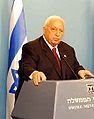
Dignitaries Praise Ariel Sharon at Funeral


http://post-humous.blogspot.com/2014/01/dignitaries-praise-ariel-sharon-at.html
by Scott Bobb

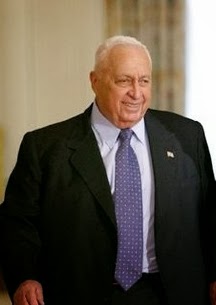
Israel's former Prime Minister Ariel Sharon has been buried at his home in the Negev before family, friends and a delegation of visiting dignitaries, following civilian and military services.

He was praised earlier in the day during a memorial service at the Knesset - the Israeli parliament - by Israeli and foreign dignitaries.

Israel's president, Shimon Peres, called him an exceptional soldier who knew how to win.

Peres said rest, great leader, who did not allow himself to rest when serving his people, defending his country and making its fields blossom.

Prime Minister Benjamin Netanyahu said although he and Sharon did not always agree when in government together they cooperated for the security and economy of the country.

He added that Sharon was a practical and pragmatic man whose pragmatism was full of deep feelings for his country and the Jewish people.

Sharon died Saturday at the age of 85. He had been in a coma for eight years after suffering a stroke while prime minister.

A veteran of four Arab-Israeli wars from 1948 to 1973, he was an independent commander who entered politics after his military career ended.

He was revered by some Israelis and criticized by others. He was generally condemned by Palestinians for his tough military tactics and offensives in which hundreds of Palestinians were killed.

U.S. Vice President Joe Biden said like all real leaders Sharon had a north star that guided him.

"His north star was the survival of the state of Israel and the Jewish people wherever they resided," he said.

Britain's former Prime Minister Tony Blair agreed, saying Sharon never wavered from this strategic objective.

"The state which from the age of 14 he fought to bring into being had to be protected for future generations. When that meant fighting, he fought. When that meant making peace, he sought peace. And the same iron determination he took to the field of war, he took to the chamber of diplomacy," said Blair.

Security was tightened in southern Israel prior to Sharon's burial at his ranch some 10 kilometers east of the Gaza Strip. The anti-rocket defense system, called Iron Dome, was deployed in the area amid reports of rocket firing.

Sharon, while prime minister in 2005, ordered an Israeli military operation in Gaza in which more than 1,000 Palestinians and 13 Israelis were killed.

He subsequently ordered the unilateral withdrawal of Israeli soldiers and settlers from Gaza.

A long-time member of the conservative Likud party, he broke away to form the centrist Kadima party the same year. He called elections for March 2006 but suffered the stroke two months before they were held.

11 January 2014

Israel's Sharon Dies at 85


http://post-humous.blogspot.com/2014/01/israels-sharon-dies-at-85_11.html
by Luis Ramirez

Former Israeli Prime Minister Ariel Sharon has died from complications associated with a massive stroke he suffered eight years ago. He was 85.

Israeli news reports say Sharon died Saturday at a hospital near Tel Aviv.

Sharon served as prime minister from 2001 until 2006, when a stroke left him hospitalized and in a coma.

A week ago, medical officials said his kidneys and other vital organs had begun to fail.

As a soldier, Sharon was known for his daring heroics on the battlefield in the decades following the creation of the State of Israel, most notably during the Yom Kippur War of 1973. In a brilliant tactical display, he led Israeli troops across the Suez Canal, cutting off Egypt's third army.

He was also known to many for being reckless and brutal. In 1982, he led an invasion of Lebanon that resulted in the massacre, by Lebanese militias, of hundreds of Palestinians at the Sabra and Shatila refugee camps in Beirut.

Dennis Ross, a former U.S. Middle East negotiator, says the military shaped Sharon.

"He certainly came to believe that the only way peace would be possible would be for Israeli strength to be respected." he said.

As a politician, Sharon was also controversial. As a cabinet member, he promoted the establishment of Jewish settlements throughout the Palestinian territories. 

Palestinian scholar Shukri Abed says this won him further hatred among Arabs. 

"To say the least, not trusted, and probably hated by many of them, because of his strong positions, because he was an advocate of  building settlements," Abed said. "He was the father of building settlements."

As head of the opposition in 2000, Sharon's visit to the Temple Mount, or Haram al-Sharif, in Jerusalem sparked anger among the Palestinians and triggered the uprising known as the Second Intifada. 

He became prime minister in 2001.

His government suppressed the uprising within a few years, and began work on the security barrier that now separates Israelis from Palestinians.

While Sharon is remembered as a tough leader who spared no action to defend his people, he was also one who could take difficult steps. 

In 2005, he oversaw Israel's withdrawal from the Gaza Strip, pulling Israeli settlers and soldiers out of the enclave in the hopes of achieving peace with the Palestinians.

"The relocation of the settlements will be in order to draw an efficient security line that will create a disengagement line between Israel and the Palestinians," Sharon said at the time.

He left the hawkish Likud party to form the centrist Kadima party which subsequently engaged in intense but unsuccessful peace talks with the Palestinians, aimed at establishing a separate Palestinian state.

In 2006, Sharon suffered a series of strokes and slipped into a coma. He was replaced by Ehud Olmert as prime minister.
  
In a vegetative state, the former prime minister spent the next few years at a hospital near Tel Aviv before being transferred to home care at his ranch in southern Israel. 

Sharon dedicated his life to building a strong Israel.  His efforts to bring peace remain a work in progress.

Israel's current prime minister, Benjamin Netanyahu, said there is "deep sorrow" in the Jewish state over Sharon's death. Sharon says the former leader will live forever in the nation's heart.

Omri Ceren is a senior adviser at The Israel Project, a pro-Israel nonprofit group in Washington. He told VOA Sharon is a figure of "overarching importance" in Israel's history for his role in reshaping the country's civil and military sectors.

"Sharon was both a military hero - at times, arguably one of the country's greatest military heroes in the aftermath of particular wars - but also a political giant," Ceren said. "He, in the military context, was thought to have been critical to winning - to literally, quite literally, winning - entire theaters during wars like the Yom Kippur War, the 1973 war. And politically, he quite literally redrew Israel's electoral map."

03 January 2013

Former Pop Superstar Patti Page Dies at 85


American Singer Patti Page, who sold more than 100 million records during her seven-decade-long career, has died. She was 85 years old.

The Oklahoma-born Page was a major star and the premier female popular singer in the pre - rock 'n roll era of the early 1950s. Her best selling recordings of “The Tennessee Waltz” and “How Much Is That Doggie in the Window” were standards, and appealed to fans of pop tunes as well as those of country music.

She also was a pioneer in the recording technique known as overdubbing, in which she sang along with recordings of her own voice being played back.

In addition, Page hosted television variety shows and appeared in films.

She was scheduled to appear at next month's Grammy Awards ceremony in Los Angeles to receive a lifetime achievement award.

01 September 2012

Late Cardinal Calls Catholic Church '200 Years Out of Date'


The former Archbishop of Milan, a one-time candidate for pope who died Friday, said in his last interview that the Catholic Church is “200 years out of date.”

Cardinal Carlo Maria Martini died Friday in Milan at 85 after suffering from Parkinson's disease.

His last interview was published Saturday in Italy's Corriere della Sera newspaper, in which he had a regular column.

The cardinal noted that churches are “big and empty” while the church bureaucracy grows and the rituals become “pompous.” He accuses the church of failing to keep up with the times.

Cardinal Martini says the recent child abuse scandal obliges the church to transform itself by admitting mistakes and beginning a radical change, starting with the pope and bishops.

Cardinal Martini was regarded as one of the most progressive voices in the church. He held relatively liberal views on such issues as contraception, celibacy for priests, and abortion.

Vatican liberals pushed the cardinal as a candidate to succeed Pope John Paul in 2005 before the more conservative wing prevailed with Pope Benedict.

28 November 2011

Lana Peters, Stalin’s Only Daughter, Dies at 85

Josef Stalin with daughter Svetlana, 1935.

Lana Peters, the only daughter of Soviet dictator Josef Stalin and a woman whose life reads like a classic Russian novel, has died at age 85 of cancer.

Born Svetlana Stalina, Peters led a privileged life in Soviet Russia. But she wrote that her father's treatment of her became brutal and tyrannical during World War Two — refusing to let her marry the men she chose and dictating what she should study in school.

She changed her name when her father died in 1953. When her Indian-born husband died in 1966 she brought his ashes to New Delhi. Evading KGB agents watching her every move, Peters went to the U.S. Embassy to announce her defection, soon arriving in New York.

Her arrival in the United States created a media sensation. She wrote a best-selling autobiography and publicly denounced the Soviet Union, calling her father a “moral monster.”

She remained, changed her name to Lana Peters, and spend the last 40 years of her life in mystery and obscurity, even moving back to the Soviet Union for a time.

Peters said she spend most of her life as a “political prisoner” of her father's name.

19 May 2011

Former Irish PM Dies at 85

Garret FitzGerald arriving for The Lisbon Treaty Count, 3 October 2009 (Photo: William Murphy)
Former Irish PM Dies at 85
Thursday, 19 May 2011

Former Irish Prime Minister Garret Fitzgerald has died in Dublin at the age of 85.

Mr. Fitzgerald served twice as prime minister. He is credited with organizing the framework for peace in Northern Ireland while improving Irish-British relations.

He also served as Ireland's foreign minister before retiring from politics in 1992.

Mr. Fitzgerald died one day after Britain's Queen Elizabeth's visit to Dublin. Queen Elizabeth offered her deep sympathy to all those who have suffered as a consequence of Ireland and Britain's troubled past.