Showing posts with label 91. Show all posts
Showing posts with label 91. Show all posts
28 September 2017

29 June 2017
Creator of Paddington Bear, Michael Bond, Dies at 91

Michael Bond was 91. His publisher said he died Tuesday after a brief illness.
There are few children who do not recognize and love Paddington and his trademark rain hat and coat and suitcase.
Bond created Paddington in 1956 after spotting a teddy bear sitting alone in a London shop.
In his first adventure, “A Bear Called Paddington,” the character was described as a stowaway from “darkest Peru” who showed up at London's Paddington train station wearing a sign saying “Please look after this bear. Thank you.”
Since his debut, Paddington has sold more than 35 million books in 40 languages, starred in movies and on television.
Shooting on a new Paddington film wrapped up this week.
Bond once said children are drawn to Paddington because of his “vulnerability.”
28 March 2015
World Leaders in Singapore Sunday for Lee's Funeral
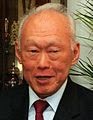
Dozens of world leaders will be in Singapore on Sunday for the state funeral of the small country's first prime minister, Lee Kuan Yew. Lee was greatly admired in the region where other leaders sought to emulate him and replicate his success.
In Bangkok, Beijing, Jakarta and other Asian capitals, Lee Kuan Yew served as a role model for leaders hoping to reproduce the magic that took Singapore from a colonial backwater to one of the world's most prosperous and efficient nations.
One of his many such admirers: former Thai prime minister Anand Panyarachun, who says as a Southeast Asian, he feels “a great sense of loss.”
“His wisdom, his advice, his insight have always been sought by leaders of other nations,” he said.
Autocrats envied the well-educated pragmatist's ability to maintain a one-party government in a nanny state that eschewed liberalism, except for economic policies.
Curtis Chin, a former U.S. ambassador to the Asian Development Bank, says many of Mr. Lee's less successful fellow leaders in the region failed to absorb his most important lessons.
“So when we think about what others can learn from Lee Kwan Yew they may be citing some things," he said. "But unfortunately too many leaders of Asia today have not learned about the rule of law, the good governance, the accountability, the battle against corruption that Lee Kwan Yew also was all about.”
Lee rejected the notion of an “Asian model” for development but articulated Asian values which, in his eyes, made individual rights subservient to collective security and growth.
Thus it is no surprise that over the decades many of China's leaders expressed admiration for the rapid transformation of Singapore under the leadership of Lee, an ethnic Hakka Chinese.
Lee made “historical contributions to the bilateral relationship” between Beijing and Singapore, says China's Foreign Ministry spokesman Hong Lei.
“Mr. Lee Kuan Yew is a uniquely influential statesman in Asia. And he is also a strategist embodying oriental values and international vision,” said Hong Lei.
The official delegation from the United States will be led by former president Bill Clinton and will include former secretary of state Henry Kissinger, a contemporary of Lee's, who said the Singaporean leader was a "close personal friend, a fact that I consider one of the great blessings of my life."
13 February 2014
Pioneering TV Comedian Sid Caesar Dies at 91
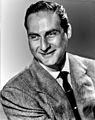
The New York born-Caesar began his career as a big band saxophonist before moving into nightclubs and the Broadway stage.
He started his television career in 1949 when he partnered with the late comedienne Imogene Coca.
Their legendary series Your Show of Shows was must-see Saturday night viewing and attracted huge audiences. Caesar rejected typical TV slapstick and in favor of sketches that showcased the best and sometimes worst of human behavior -- ill-tempered bosses, angry husbands, life in suburbia, and pretentious professors.
Your Show of Shows also parodied foreign films to highlight Caesar's ability to speak in realistic-sounding Russian, Japanese, and French dialect which was actually gibberish and nonsense.
The writing staff of Your Show of Shows and Caesar's subsequent series reads like a "who's who" of American comedy. They include Mel Brooks, Woody Allen, Neil Simon, and Larry Gelbart.
After television, Caesar returned to Broadway and films and wrote candidly about his battles with alcoholism and drug abuse in an 1982 autobiography.
06 December 2012
Pioneering Jazz Musician Dave Brubeck Dies

Jazz pianist and composer Dave Brubeck died Wednesday in Norwalk, Connecticut of heart failure. He was 91. Brubeck rose to fame in the 1950s and became known the world over. His recordings cover a wide spectrum of music including jazz, classical, spiritual and even pop.
Many believe that Dave Brubeck's "Blue Rondo A La Turk" from his groundbreaking 1959 album "Time Out" ushered in a new era for jazz. Like others on the album, it was a song that combined complex time signatures with classical, jazz and Third World rhythms.
David Warren Brubeck was born in Concord, California and was first exposed to music by his mother, a classically trained piano teacher. He discovered jazz improvisation while studying with French composer Darius Milhaud. His interest in jazz was fueled by the formation of the Dave Brubeck Quartet and his own label Fantasy Records.
Following World War II, his group found work in small towns across America. Brubeck said those thriving jazz clubs provided his finest training.
"When I grew up almost every bar had a small combo and there were dance halls that we used to drive across this country, from one dance hall -- and maybe 200 or 300 miles -- the next day we'd be in a different dance hall. Great dance halls clear across the open part of Nebraska and those towns, and we'd come across that way. It's changed a lot because most of our jazz now is in the universities and colleges [that] have taken over the old way that we used to have...a way to learn was one-on-one next to an old veteran."
The Dave Brubeck Quartet consisted of Paul Desmond on alto saxophone, Joe Morello on drums, Eugene Wright on bass and Dave Brubeck on piano when they recorded the Desmond classic "Take Five." The song was so successful that it earned a spot on the popular music charts.
One of Brubeck’s best-selling albums was "Jazz Goes To College," recorded in American coffeehouses and college auditoriums during a tour in 1954. It sold more than a million copies and landed Brubeck on the cover of Time magazine.
Brubeck believed that the younger generation played an important role in shaping the direction of jazz.
"What we're going to have now is the individual who's come out of this group of people that respect the past," he said. "Because you really can't take a step forward until you know what was behind you."
The Dave Brubeck Quartet continued to tour and record until 1967 when Brubeck decided to pursue jazz-based symphonic works and sacred music. A seasoned world traveler, he recorded several albums based on his reflections of other cultures. Among them, were "Jazz Impressions of Eurasia," "Jazz Impressions of Japan" and "Moscow Night."
In 1993, Dave Brubeck teamed up with his sons Chris on bass and Dan on drums to record "Trio Brubeck." Three years later, he won a Grammy Award for Lifetime Achievement, and in 2009, he was the recipient of a Kennedy Center Honor. His son Chris once remarked, "Making music together is the most natural thing in the world for this family."
Dave Brubeck died Wednesday December 5, one day before his 92nd birthday.
04 September 2012
Legendary US Songwriter Hal David Dies at 91

He was 91 years old.
David teamed up with Bacharach in the late 1950s. Working with singer Dionne Warwick, the Bacharach-David songbook became a soundtrack of American life in the late 1960s. Their hits included Walk on By, Alfie, Do You Know the Way to San Jose, and What Do You Get When You Fall in Love.
The team won Oscars and Grammy awards, wrote soundtracks for films and television, and was in demand by other musical icons, such as Frank Sinatra and The Beatles.
President Barack Obama awarded David and Bacharach The U.S. Library of Congress Gershwin Prize for Popular Song at a White House ceremony in May.
21 June 2012
Famed U.S. Sports Artist Neiman Dies

Neiman won millions of fans with his impressionistic paintings of numerous Super Bowls and Olympic Games, producing many of his iconic paintings on live television, which also earned him notoriety for his flamboyant image, including his trademark handlebar mustache. He eventually became the official artist of the 1980 and 1984 Olympic Winter Games and the 1984 Summer Games.
Other sporting events Neiman captured on canvas included numerous heavyweight boxing matches and the 1972 world chess championship match between American Bobby Fisher and Russian Boris Spassky. Neiman also created portraits of such figures as boxing legend Muhammed Ali and football star Joe Namath.
He first drew public notice in the 1950s, when he became a contributing artist for the adult men's magazine Playboy. His series for the magazine's “Man at His Leisure” took him to events held in some of the world's most glamorous places, including the Grand Prix auto race in Monaco, the steeplechase horse races in London, and the running of the bulls in Pamploma, Spain.
(Photo by Creative Stuff. David McLane with Neiman and the mural he created for Triple Crown of Polo, 2005.)
07 June 2012
Science Fiction Icon Ray Bradbury Dead at 91

Bradbury is perhaps most remembered for his 1953 novel Fahrenheit 451, about a futuristic society where book burning is an official policy. Often described as a story about the evils of censorship, Bradbury said the book was really about television destroying people's interest in literature.
Bradbury first catapulted to international fame years earlier, in 1950, when he published The Martian Chronicles, a collection of stories about human attempts to colonize Mars. It book was eventually published in more than 30 languages.
Bradbury was a rarity in the literary world — a science fiction writer who managed to win acclaim from critics for the quality of his writing and story-telling. But Bradbury's works were often about much more than fantastic visions of the future. He used the The Martian Chronicles' stories to express stinging criticism of current events, addressing controversial topics like racism, pollution, nuclear war and technology gone out of control.
In all, Bradbury wrote more than 30 books and nearly 600 short stories across his decades-long career, as well as poems, plays and screenplays.
President Barack Obama said Bradbury's gift for storytelling reshaped the culture and will inspire generations to come.
Bradbury's love for writing, and for writing about the future, came from his childhood.
Born on August 22, 1920 in in Waukegan, Illinois, his father moved the family to Los Angeles when Bradbury was young. He told CBS television in 1988 his family never had much money, but that at a young age he fell in love with the science fiction comic strip, Buck Rogers.
“All the kids at school made fun of me, I tore them up. A month later, I broke into tears and I said to myself, 'Who died?' The answer was 'Me.' I listened to those fools, they made fun of my love. I went back and collected the Buck Rogers comic strips and discovered [that] that was the way to live.”
Bradbury said that philosophy stuck with him the rest of his life.
“I've learned long ago that everyone else was wrong and I was right. If you learn that when you're 9, 10 or 11, and keep that with you for a lifetime, you'll have a good life.”
He also sought inspiration from his toys and mementos he had collected over the years and refused to throw away. They found a home in the basement of his Los Angeles home, which also served as his writing studio.
“You never know where you're going to get an idea, and really these are metaphors as I look around at them, and one by one, I pick up on them. I say that would make a short story. So I begin to type, I put nouns on the paper. I describe some of these toys. Next thing you know I have a short story. So I've learned not to throw things away because that's what a writer is, a collector of objects, symbols, metaphors. Call them what you will, but you never know when something here is going to turn into another story.”
Bradbury devoted himself to his craft, striving to spend at least four hours a day writing. Too poor to afford a college education, he spent hours in the library, eventually writing Fahrenheit 451 on a rented typewriter at the library of the University of California-Los Angeles.
That love of libraries stayed with him throughout his life and in a 2010 interview with the U.S. State Department he said, “what I think I can teach people is that a library is more important than a college or university.”
Despite his love for the written word, Bradbury did not limit his vision to stories and books. He consulted with the builders of the U.S. pavilion for the 1964 World Fair in New York and collaborated with the Walt Disney World resort in Florida for its Spaceship Earth exhibit at the futuristic Epcot Center.
Yet for all of his tales about science, technology and the future, Bradbury often shunned the conveniences of modern-day life.
He refused to drive a car, saying he witnessed an automobile accident as a young man that forever terrified him of driving. And for much of his life he refused to fly in airplanes.
He also had a lingering distrust of computers. In his 2010 State Department interview he said the information available to people on computers “is not quite the same as the information you get in a library.” He said if he had his way, “I would burn the computers and not the libraries.”
17 March 2012
Convicted Nazi Death Camp Guard John Demjanjuk Dead at 91

Police in the southern German state of Bavaria say the ailing Demjanjuk died in a nursing home in the town of Bad Feilnbach. He had been sentenced last May to five years in prison, but was freed pending an appeal.
The Ukrainian-born Demjanjuk denied any role in the Holocaust and claimed that he was a victim of the Nazis himself. He told the court he was drafted into the Soviet army in 1941, held as a German prisoner of war and recruited as a prison camp guard.
After World War II Demjanjuk became a U.S. citizen and spent decades working as a mechanic before he was extradited to face trial in Germany in 2009. His conviction set a legal precedent in Germany, marking the first time someone was convicted solely on the grounds of serving as a camp guard, with no evidence of being involved in a specific crime.
In 1988, Demjanjuk was convicted in Israel of being the notorious guard known as “Ivan the Terrible.” Israel's Supreme Court later overturned the conviction as a case of mistaken identity.
Subscribe to:
Posts (Atom)