Showing posts with label general. Show all posts
14 January 2014
Dignitaries Praise Ariel Sharon at Funeral
by Scott Bobb
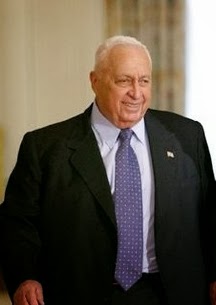
Israel's former Prime Minister Ariel Sharon has been buried at his home in the Negev before family, friends and a delegation of visiting dignitaries, following civilian and military services.
He was praised earlier in the day during a memorial service at the Knesset - the Israeli parliament - by Israeli and foreign dignitaries.
Israel's president, Shimon Peres, called him an exceptional soldier who knew how to win.
Peres said rest, great leader, who did not allow himself to rest when serving his people, defending his country and making its fields blossom.
Prime Minister Benjamin Netanyahu said although he and Sharon did not always agree when in government together they cooperated for the security and economy of the country.
He added that Sharon was a practical and pragmatic man whose pragmatism was full of deep feelings for his country and the Jewish people.
Sharon died Saturday at the age of 85. He had been in a coma for eight years after suffering a stroke while prime minister.
A veteran of four Arab-Israeli wars from 1948 to 1973, he was an independent commander who entered politics after his military career ended.
He was revered by some Israelis and criticized by others. He was generally condemned by Palestinians for his tough military tactics and offensives in which hundreds of Palestinians were killed.
U.S. Vice President Joe Biden said like all real leaders Sharon had a north star that guided him.
"His north star was the survival of the state of Israel and the Jewish people wherever they resided," he said.
Britain's former Prime Minister Tony Blair agreed, saying Sharon never wavered from this strategic objective.
"The state which from the age of 14 he fought to bring into being had to be protected for future generations. When that meant fighting, he fought. When that meant making peace, he sought peace. And the same iron determination he took to the field of war, he took to the chamber of diplomacy," said Blair.
Security was tightened in southern Israel prior to Sharon's burial at his ranch some 10 kilometers east of the Gaza Strip. The anti-rocket defense system, called Iron Dome, was deployed in the area amid reports of rocket firing.
Sharon, while prime minister in 2005, ordered an Israeli military operation in Gaza in which more than 1,000 Palestinians and 13 Israelis were killed.
He subsequently ordered the unilateral withdrawal of Israeli soldiers and settlers from Gaza.
A long-time member of the conservative Likud party, he broke away to form the centrist Kadima party the same year. He called elections for March 2006 but suffered the stroke two months before they were held.
Labels:
1981,
1983,
2001,
2006,
85,
Ariel,
Ariel Sharon,
general,
heart failure,
Israeli,
Minister of Defense,
Prime Minister,
Sharon,
statesman
11 January 2014
Israel's Sharon Dies at 85
by Luis Ramirez
Former Israeli Prime Minister Ariel Sharon has died from complications associated with a massive stroke he suffered eight years ago. He was 85.
Israeli news reports say Sharon died Saturday at a hospital near Tel Aviv.
Sharon served as prime minister from 2001 until 2006, when a stroke left him hospitalized and in a coma.
A week ago, medical officials said his kidneys and other vital organs had begun to fail.
As a soldier, Sharon was known for his daring heroics on the battlefield in the decades following the creation of the State of Israel, most notably during the Yom Kippur War of 1973. In a brilliant tactical display, he led Israeli troops across the Suez Canal, cutting off Egypt's third army.
He was also known to many for being reckless and brutal. In 1982, he led an invasion of Lebanon that resulted in the massacre, by Lebanese militias, of hundreds of Palestinians at the Sabra and Shatila refugee camps in Beirut.
Dennis Ross, a former U.S. Middle East negotiator, says the military shaped Sharon.
"He certainly came to believe that the only way peace would be possible would be for Israeli strength to be respected." he said.
As a politician, Sharon was also controversial. As a cabinet member, he promoted the establishment of Jewish settlements throughout the Palestinian territories.
Palestinian scholar Shukri Abed says this won him further hatred among Arabs.
"To say the least, not trusted, and probably hated by many of them, because of his strong positions, because he was an advocate of building settlements," Abed said. "He was the father of building settlements."
As head of the opposition in 2000, Sharon's visit to the Temple Mount, or Haram al-Sharif, in Jerusalem sparked anger among the Palestinians and triggered the uprising known as the Second Intifada.
He became prime minister in 2001.
His government suppressed the uprising within a few years, and began work on the security barrier that now separates Israelis from Palestinians.
While Sharon is remembered as a tough leader who spared no action to defend his people, he was also one who could take difficult steps.
In 2005, he oversaw Israel's withdrawal from the Gaza Strip, pulling Israeli settlers and soldiers out of the enclave in the hopes of achieving peace with the Palestinians.
"The relocation of the settlements will be in order to draw an efficient security line that will create a disengagement line between Israel and the Palestinians," Sharon said at the time.
He left the hawkish Likud party to form the centrist Kadima party which subsequently engaged in intense but unsuccessful peace talks with the Palestinians, aimed at establishing a separate Palestinian state.
In 2006, Sharon suffered a series of strokes and slipped into a coma. He was replaced by Ehud Olmert as prime minister.
In a vegetative state, the former prime minister spent the next few years at a hospital near Tel Aviv before being transferred to home care at his ranch in southern Israel.
Sharon dedicated his life to building a strong Israel. His efforts to bring peace remain a work in progress.
Israel's current prime minister, Benjamin Netanyahu, said there is "deep sorrow" in the Jewish state over Sharon's death. Sharon says the former leader will live forever in the nation's heart.
Omri Ceren is a senior adviser at The Israel Project, a pro-Israel nonprofit group in Washington. He told VOA Sharon is a figure of "overarching importance" in Israel's history for his role in reshaping the country's civil and military sectors.
"Sharon was both a military hero - at times, arguably one of the country's greatest military heroes in the aftermath of particular wars - but also a political giant," Ceren said. "He, in the military context, was thought to have been critical to winning - to literally, quite literally, winning - entire theaters during wars like the Yom Kippur War, the 1973 war. And politically, he quite literally redrew Israel's electoral map."
Labels:
1981,
1983,
2001,
2006,
85,
Ariel,
Ariel Sharon,
general,
heart failure,
Israeli,
Minister of Defense,
Prime Minister,
Sharon,
statesman
02 January 2014
Final Exits of 2013
Pakistani Religious Scholar Dies
http://post-humous.blogspot.com/2013/01/pakistani-religious-scholar-dies.html
'Dear Abby' Advice Columnist Dies at 94
http://post-humous.blogspot.com/2013/01/dear-abby-advice-columnist-dies-at-94.html
Legendary White House Reporter Helen Thomas Dead at 92
http://post-humous.blogspot.com/2013/07/legendary-white-house-reporter-helen.html
World's Oldest Man Dies
http://post-humous.blogspot.com/2013/09/worlds-oldest-man-dies.html
Vietnam Mourns General
http://post-humous.blogspot.com/2013/10/vietnam-mourns-general.html
Pulitzer Prize-Winning Novelist Oscar Hijuelos Dies at 62
http://post-humous.blogspot.com/2013/10/pulitzer-prize-winning-novelist-oscar.html
Music: Final Exits of 2013
http://post-humous.blogspot.com/2014/01/music-final-exits-of-2013.html
Politics: Final Exits of 2013
http://post-humous.blogspot.com/2014/01/politics-final-exits-of-2013.html
Labels:
advice,
columnist,
Dear Abby,
dies,
general,
Helen Thomas,
Legendary,
man,
Mourns,
novelist,
Oscar Hijuelos,
Pakistani,
Pulitzer Prize,
Religious,
Reporter,
Scholar,
Vietnam,
White House,
Winning,
World's Oldest
12 October 2013
Vietnam Mourns General
by Marianne Brown
Streets are blocked off in central Hanoi and unrelated public events canceled this weekend as Vietnam mourns the death of one of its most celebrated war heroes, General Vo Nguyen Giap, who died on October 4 at the age of 102.
On Saturday, the country's most powerful politicians and military leaders led processions of mourners to honor a man considered one of modern Vietnam’s founding fathers. Rows of soldiers in white uniforms stood at attention outside the the National Funeral Hall in central Hanoi, where the general’s body lies in state.
Over the course of the day, 175 delegations are expected to visit.
Earlier this week, tens of thousands of mourners stood in line for hours outside the general’s home, many carrying yellow daisies to pay their respects to the man dubbed Vietnam’s “red Napoleon” for his role in masterminding the battle of Dien Bien Phu, which ended French colonial rule in 1954.
Through tears, one elderly woman, who gave her name only as Thu, said Giap’s role in Vietnamese history was second only to President Ho Chi Minh.
Thu, volunteer during the war, said Giap was the greatest commander, very good at leading the country against the French and the Americans. She said thanks to him, Vietnam has peace today.
Another mourner, 84-year-old Nguyen Xuan Tu from Nghe An, says he spent 34 years in the army fighting for the North Vietnamese. When he heard about the general’s death he said he was so moved he could not cry.
As well as the battle of Dien Bien Phu, Giap is also credited as one of the tacticians behind the 1968 Tet Offensive and other major military campaigns against the United States.
However, some historians question how crucial his role in war against the Americans really was.
Lien-Hang Nguyen, associate professor of history at the University of Kentucky and author of the book "Hanoi’s War: An International History of the War for Peace in Vietnam," says it is inaccurate to say Giap led the war effort against the United States because he was sidelined politically by leaders in the Communist Party, Le Duan and Le Duc Tho, who felt threatened by his popularity.
"There was no way they could do away with him, but what they could do behind closed doors was marginalize him in the top party leadership, and silence him when he opposed them" Hang said.
After Dien Bien Phu, where thousands more Vietnamese troops died compared to their French adversaries, Giap became known as a tactician willing to sacrifice large numbers of soldiers in return for victory. However, Hang said later in the war he did not want to spend as many lives and it was other leaders who were blind to the casualties.
In the early 1980s the general was removed from his position in the Ministry of Defense and the politburo, and effectively pushed out of political office by the 1990s.
Despite outliving his rivals, Giap never spoke out against the party.
Some observers have questioned whether the general did make a political statement in the end by choosing to be buried in his hometown in Quang Binh province, south of Hanoi. Many expected him to be buried alongside his war-time associates at Mai Dich military cemetery in Hanoi.
The National Funeral Hall will remain open to mourners until Saturday evening. On Sunday, a grand procession will escort the general's body to his hometown for burial.
Labels:
102,
1976,
1980,
general,
Giap,
Minister of Defence,
Nguyen,
politician,
Vietnamese,
Vo,
Vo Nguyen Giap
29 December 2012
Gulf War Commander Schwarzkopf Dies at 78
Retired Army General Norman Schwarzkopf, who commanded the U.S.-led international coalition that drove Iraqi forces out of Kuwait in 1991, has died. He was 78.
Schwarzkopf died Thursday of complications from pneumonia in Tampa, Florida, where he lived in retirement.
A much-decorated combat soldier in Vietnam, Schwarzkopf was known popularly as “Stormin' Norman'' because of his notoriously explosive temper. In 1991, he led Operation Desert Storm, which liberated Kuwait from Iraqi dictator Saddam Hussein's forces.
Schwarzkopf stayed in Tampa after he served in his last military assignment there as commander-in-chief of the U.S. Central Command — the headquarters responsible for U.S. military and security concerns in nearly 20 countries from the eastern Mediterranean and Africa to Pakistan.
Schwarzkopf retired from active service in late 1991. In the aftermath of the Gulf War, there was some speculation that he might run for political office, but he never did.
U.S. President Barack Obama said in a statement that Schwarzkopf was “an American original” and said the general's “legacy will endure in a nation that is more secure because of his patriotic service.”
Former U.S. president George H.W. Bush, under whom Schwarzkopf served in the Gulf War, called the general “a true American patriot and one of the great military leaders of his generation.” He also called Schwarzkopf “a good and decent man and a dear friend.”
Defense Secretary Leon Panetta called him “a brilliant strategist and inspiring leader” and “one of the great military giants of the 20th century.”
Former Secretary of State Colin Powell, also a contemporary of Schwarzkopf, called him “a close buddy” and said his leadership not only inspired American troops, but also the nation.
23 July 2011
Former US Joint Chiefs Chairman Shalikashvili Dies
![]() |
| General Shalikashvili greets President Bill Clinton. (Photo: U.S. Army) |
Saturday, 23 July 2011
Retired U.S. General John Shalikashvili, the first foreign-born chairman of the U.S. Joint Chiefs of Staff, has died at age 75.
There were no immediate reports on the cause of Shalikashvili's death. He suffered a stroke in 2004.
General Shalikashvili served as chairman of the Joint Chiefs from 1993 to 1997 under then-President Bill Clinton. He made decisions on U.S. military involvement in Bosnia, Haiti and other troubled spots in the world.
Shalikashvili was born in Poland in 1936 and came to the U.S. as a teenager. He rose through the ranks in the Army and succeeded former General Colin Powell as chairman of the Joint Chiefs of Staff, the highest-ranking U.S. military officer, in 1993.
Following word of Shalikashvili's death Saturday, U.S. President Barack Obama said the general's “extraordinary life represented the promise of America.” Defense Secretary Leon Panetta called him an “extraordinary patriot who faithfully defended his country for four decades, rising to the pinnacle of the military profession.” The current chairman of the Joint Chiefs, Admiral Mike Mullen, said during Shalikashvili's tenure as chairman of the Joint Chiefs, he “skillfully shepherded” the U.S. military through the early years of the post-Cold War era.
General Shalikashvili spent his later years living near Fort Lewis in the western U.S. state of Washington.
Subscribe to:
Posts (Atom)