Showing posts with label british. Show all posts

06 March 2018

Inventor of Wind-Up Radio Dies

British inventor Trevor Baylis, the creator of the wind-up radio, died Monday at the age of 80.

Acquaintances say Baylis died of natural causes after a lengthy illness.

Baylis developed the BayGen radio in the early 1990s after seeing a television program about the spread of AIDS in Africa and the need to get lifesaving information to people who did not have electricity and could not afford batteries.

Inspired by old-fashioned gramophones, the wind-up radio functioned with an internal generator, doing away with the need for batteries or access to electricity. The invention won Baylis international acclaim.

The earliest version ran for 14 minutes at a time, and production facilities were located in South Africa.

[Photo by J. D. Pfaff : A BayGen Freeplay clockwork radio. It is powered by human muscle power and does not need batteries or recharging from mains power outlets. The radio is powered by a small internal electric generator turned by a spiral mainspring. When it runs down, the mainspring is wound up by turning the crank visible on the right hand side. The crank folds into the frame when not in use. The FreePlay was the first modern human-powered radio, and was originally designed as a low-cost radio for use in rural developing countries where electric power and batteries were not easily available.]

29 June 2017

Creator of Paddington Bear, Michael Bond, Dies at 91


The writer who created the beloved children's character Paddington Bear has died.

Michael Bond was 91. His publisher said he died Tuesday after a brief illness.

There are few children who do not recognize and love Paddington and his trademark rain hat and coat and suitcase.

Bond created Paddington in 1956 after spotting a teddy bear sitting alone in a London shop.

In his first adventure, “A Bear Called Paddington,” the character was described as a stowaway from “darkest Peru” who showed up at London's Paddington train station wearing a sign saying “Please look after this bear. Thank you.”

Since his debut, Paddington has sold more than 35 million books in 40 languages, starred in movies and on television.

Shooting on a new Paddington film wrapped up this week.

Bond once said children are drawn to Paddington because of his “vulnerability.”

31 March 2016

Renowned Architect Zaha Hadid Dies in Miami


http://post-humous.blogspot.com/2016/03/renowned-architect-zaha-hadid-dies-in.html
by Amanda Scott

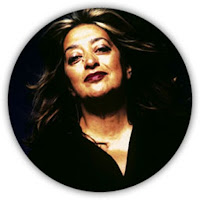
One of Britain's most innovative architects, Zaha Hadid, has died at age 65.

Hadid's firm says she died Thursday at a hospital in Miami, Florida, where she was being treated for bronchitis.

​​In 2004, Hadid became the first woman to win the Pritzker Prize, the most prestigious award for architecture.

The American philanthropist Thomas Pritzker, presenting the award, said Hadid's work "organizes land, space, structure and person so that each is inseparable from the other, and each calls to the other."

Born in Iraq, Hadid studied mathematics at the American University in Beirut. She completed her architectural studies in Britain, where she continued to live and work.

She designed projects around the world including the glass, granite and steel Guangzhou Opera House in China, the London Aquatics Center, built for the 2012 Olympics, and the Sheikh Zayed bridge in Abu Dhabi, a curved design meant to "evoke the undulating sand dunes of the desert."

At the time of her death, Hadid was working on stadiums for the 2022 World Cup in Qatar and a new Iraqi parliament building in Baghdad.

Earlier this year, the Royal Institute of British Architects awarded Hadid its Gold Medal, honoring her as "a formidable and globally influential force in architecture."

"Part of architecture’s job is to make people feel good," Hadid said in her remarks to the RIBA, "in the spaces where we live, go to school or where we work - so we must be committed to raising standards."

(Photo: Zaha Hadid in 2011, from the Knight Foundation)

10 March 2016

Sir George Martin, ‘Fifth Beatle,’ Dies at 90


http://post-humous.blogspot.com/2016/03/sir-george-martin-fifth-beatle-dies-at.html
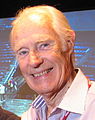
Former Beatles drummer Ringo Starr has announced the death of the so-called "fifth Beatle," producer Sir George Martin, at age 90.

Starr posted the news on Twitter Wednesday, with a photograph of Martin with the Beatles captioned "Thank you for all your love and kindness George."

Universal Music Group has confirmed the death, but details have not been released.

British Prime Minister David Cameron tweeted a tribute early Wednesday, calling Martin "a giant of music."

Martin, a classically trained musician, signed the four young Beatles to a music contract in 1962. He was considered essential to their success, helping them arrange, and produce many of their biggest hits, starting with one of their first: 1962's "Love Me Do."

​​In some cases, Martin's classical music training filled in gaps for band members John Lennon, Paul McCartney, George Harrison, and Starr, who entered the industry with only a basic knowledge of reading and writing music. Martin is credited with scoring now-iconic trumpet solos, string quartet interludes, and piano breaks in some of the Beatles' most memorable songs.

After the breakup of the Beatles in 1970, Martin went on to work with other artists such as Elton John, Bob Dylan, and Sting. He was knighted by the British monarchy in 1996.

Martin continued working on Beatles-related projects, recording two solo albums for Paul McCartney and, in 2006, developing a Beatles-based Cirque de Soleil show called "Love" that has won two Grammy awards for its soundtrack.

Guinness World Records has named Martin as the most successful music producer ever, with more than 50 number-one hit records in Britain and the United States alone, over a career that lasted six decades.

22 August 2013

Jazz Pianist Marian McPartland Dead at 95


by Eric Felten, Bernie Bernard

Marian McPartland, one of the best-known jazz artists in America, died August 20 in Port Washington, New York. She was 95. A musician who broke ground for women instrumentalists in the 1940s and ‘50s, she would later become best known as host of the long-running radio program “Piano Jazz.”

McPartland’s elegant approach to jazz gracefully spanned several major eras, from swing to bebop and beyond. Ms. McPartland brought the musical knowledge earned over decades playing in night-clubs to National Public Radio, where for more than 30 years she hosted “Piano Jazz,” a program that mixed conversation and performance with many of the world’s best musicians.

Born Margaret Marian Turner in Windsor, England, as a girl she took up piano. To her parents’ dismay, when she was 20 she left home to join a four-piano vaudeville act. On a tour playing for Allied troops during World War II she met American jazz trumpeter Jimmy McPartland. They married, and, after the war, moved to the United States. With her husband's encouragement, McPartland went on to lead her own small bands.

McPartland landed a steady job performing at a New York City jazz club, the Hickory House. She played there for eight years, and developed a reputation not only for her fine piano playing, but for her melodic original compositions. Her songs were recorded by singers such as Tony Bennett, Sarah Vaughan, and Peggy Lee.

At first, McPartland was so nervous about her songwriting she wouldn't take the credit for her own tunes.

"Years ago, I felt very insecure about writing songs, and I wrote one at the Hickory House," she said. "Somebody said, 'That's a nice song,' so then it was O.K. for me to say that I had written it. Isn't that sick?"

Starting in the 1960s, McPartland traveled to schools around the United States, encouraging students to develop an appreciation for jazz. She would use popular songs to introduce young listeners to the many sounds of jazz.

"I'll probably pick a tune that they know, something they've all heard, like the theme of [television program] 'M.A.S.H.,' for instance. They all know that. Then I'll do it another way, maybe like jazz, blues or something slow.  And I'll go through a whole thumbnail history of jazz. I'll do some boogie-woogie and so on, and really kind of grab them with that. But as long as you know tunes that they know, I think that helps a lot."

McPartland took that approach to the airwaves in 1979. Her weekly show, “Piano Jazz” became one of the most popular programs on public radio, airing across the United States for over three decades. Each week she would engage noted musicians in casual, relaxed interviews. She would take turns with her guests playing songs, and then would perform duets with them. Both in its music and its conversations, McPartland’s “Piano Jazz” expressed the core jazz virtue of improvisation.

The National Endowment for the Arts recognized McPartland as a “Jazz Master” in 2000. Four years later she won a special Grammy Award for her lifetime achievement. She continued to perform and broadcast into her nineties.

18 April 2013

Britain Says Goodbye to Former PM Thatcher


by Al Pessin

Queen Elizabeth II and dignitaries from around the world attended the funeral of former British Prime Minister Margaret Thatcher in London. Thatcher, 87, died last week.

Her casket was carried on a horse-drawn gun carriage through the center of London, as people crowded the sidewalks to pay their respects.

It was escorted by military units, and all along the route security was even tighter than originally planned because of Monday’s Boston Marathon bombings. 

There were some protests, but there were no serious incidents.

Inside St. Paul’s Cathedral, the casket lay in front of more than 2,000 mourners. The current Prime Minister David Cameron was there, as were leaders and former leaders from around the world. But there was no official from Argentina, which Thatcher defeated in the 1982 Falkland Islands War.

It was a prayer service, with no formal eulogy. But the Bishop of London, Richard Chartres, gave a brief address, saying, "After the storm of a life lived in the heat of political controversy, there is a great calm. ... Lying here, she is one of us, subject to the common destiny of all human beings.”

Margaret Thatcher was Britain’s only female prime minister, and the longest serving of the 20th Century, holding the office for 11 years. Her passionately conservative policies transformed the country, and ignited strong emotions both in favor and opposed, feelings that have been on display again during the past week, even though she left office 23 years ago.

And that, in the end, is testament to the impact of her life.

(Photo by Minoritenplatz8/Martin451)

09 April 2013

Britain's Thatcher to be Buried April 17


Britain has announced that the funeral for former British prime minister Margaret Thatcher will take place next Wednesday, April 17.

The government has said Thatcher would receive a ceremonial funeral at St. Paul's Cathedral with military honors - a step short of a state funeral - in accordance with the wishes of her family. It said a private cremation would follow later.

The former British prime minister died Monday at the age of 87 following a stroke. The outspoken Thatcher led the Conservative Party to three election victories from 1979 to 1990, the longest continuous period in office by a British prime minister since the early 19th century.

U.S. President Barack Obama and other leaders around the world have have paying tribute to Thatcher, known was the "Iron Lady" for her personal and political toughness.

Thatcher was a stern conservative who broke the power of British unions, eliminated many government subsidies and enabled a far greater role for private enterprise.

She led Britain through its 1982 war with Argentina over the Falkland Islands, strongly opposed European integration and built a close "special relationship" with U.S. President Ronald Reagan that some people claim helped spur the downfall of Soviet communism.

Tributes to Margaret Thatcher Pour In


Reaction to the death of former British Prime Minister Margaret Thatcher is coming in from around the world.

U.S. President Barack Obama said in a statement, "The world has lost one of the great champions of freedom and liberty."

European Union Commission President Jose Manuel Barroso recalled her contributions to a more stable Europe.

"She was without doubt a great stateswoman, the first female prime minister of her country, and a circumspect yet engaged player in the European Union. She will be remembered both for her contributions and her reserves to our common project," said Barroso.

Former French president Valerie Giscard d'Estaing remembered Thatcher as a leader who always put her country first.

"She was not interested in the structure of the system, not very much in the future of the system, she was interested in the position of Britain in Europe and she protected it as best as she could," said d'Estaing.

Israeli President Shimon Peres called her exceptional. "I had the highest regard and admiration for the way she combined leaders and ideas to create a new situation." 

United Nations Secretary-General Ban Ki-moon said the world will miss her great leadership, calling her a "pioneer" for her contributions to peace and security during the height of the cold war. He also praised Thatcher for giving great hope to women for gender equality in politics.

Former Soviet president Mikhail Gorbachev said Thatcher was a "great politician" whose words "carried great weight." The Nobel Peace Prize winner, who held frequent meetings with Thatcher at the end of the Cold War, called her death "sad news."

Other world leaders also are offering praise, including Spanish Prime Minister Mariano Rajoy, who said today's leaders would do well to learn from her.

"Her unbreakable commitment to freedom, democracy and the state of law, as well as her firm reformist determination, are an invaluable legacy for European current leaders who, just like it happened in the 80's when Margaret Thatcher ruled, face now very complex challenges that require big doses of political ambition and courage," said Rajoy.

Britain's 'Iron Lady' Dead at 87


by Al Pessin

Former British Prime Minister Margaret Thatcher has died at the age of 87, following a stroke.

Family spokesman Lord Tim Bell said Britain's only female prime minister died peacefully on Monday morning. Within minutes of the announcement, ordinary citizens began to put flowers and condolence notes outside her home in London.

The British government said Thatcher would receive a ceremonial funeral at St. Paul's Cathedral with military honors - a step short of a state funeral - in accordance with the wishes of her family. It said a private cremation would follow later, but provided no details on the timing of the service.

Thatcher, who was made a baroness by Queen Elizabeth, had a long and controversial career, transforming the British economy and society with her Conservative Party’s anti-union, anti-regulation policies during an 11-year tenure from 1979 to 1990.

She was a grocer’s daughter who rose to become Britain’s only woman prime minister, and she held the job longer than anyone else in the 20th Century. When she first came to office, she expressed this hope.

“Where there is discord may we bring harmony, where there is error may we bring truth, where there is doubt may we bring faith and where there is despair may we bring hope,” she said.

But her tenure through three election victories created considerable discord, alienating workers, deregulating health and safety hazards, and splitting her own Cabinet on some issues. She stood firm against militants in Northern Ireland, allowing one of them to starve himself to death in prison. 

She supported British membership in the European Union, but insisted on not participating in the open borders agreement and the common euro currency. And she took the country to war with Argentina over the Falkland Islands.

Dignitaries react

On Monday, Queen Elizabeth expressed sadness at Mrs. Thatcher’s death, and approved plans for a ceremonial funeral with full military honors and a procession across London to St. Paul’s Cathedral.

Prime Minister David Cameron, also a Conservative, cut short a visit to Spain and France following the news. He said Monday his country had "lost a great leader, a great prime minister and a great Briton."

Cameron said “she did not just lead our country, she saved our country,” and said she will go down in history as “the greatest British peacetime prime minister.” 

European Commission head Jose Manuel Barroso paid tribute Monday to her "contributions" to the growth of the EU, despite her reservations about its merits.

Former Soviet president Mikhail Gorbachev said Thatcher was a "great politician" whose words "carried great weight." The Nobel Peace Prize winner, who held frequent meetings with Thatcher at the end of the Cold War, called her death "sad news."

U.S. President Barack Obama said “the world has lost one of the great champions of freedom and liberty, and America has lost a true friend.”

Within minutes of the announcement, ordinary citizens began to put flowers and condolence notes outside her home in London. Throughout the city, people were hearing the news as they went out for lunch.

“It is a terrible loss for the UK, but also I think all around the world really," said one citizen. "I think she was an inspirational woman, and I think there will be lots of people affected by this.”

“She took some difficult decisions, was not afraid to put people’s noses out of joint," said another. "And I think a lot of people on both sides of the political spectrum respected her for that.”

“I do not think she did more harm than good. I think she did what could with what she had, like most people do. And it was a hard job to do, I would say, especially being a woman,” another citizen added.

Mrs. Thatcher’s supporters and opponents agree that she had a huge impact on Britain, as a pioneering woman in politics and as a transformational prime minister. As with any politician, her legacy will be mixed, but all appear to agree she earned her nickname, the Iron Lady.

Changed British politics

Thatcher, who is credited with changing the face of British politics during her three terms as Prime Minister, was married to Denis Thatcher and had two children, a son and daughter - twins.

In her autobiography, Thatcher said her foremost achievement, as prime minister, was to shift British policy from what she called soft socialism to a free-enterprise society.

Five years after leaving office, she told a television interviewer she had also restored Britain's high rank in the world because of her unwavering stand for freedom and liberty. She recalled her decision to send British troops to defend the Falkland Islands in 1982 when Argentine forces invaded the British dependency.

"People knew that we would not tolerate an aggressor. We would not appease an aggressor. So we went down to the Falklands," she recalled. "That was the first time an aggressor had been thrown out in the post war period. So we did turn Britain around to become a great nation again although within much smaller borders in a way because we no longer have an empire. But we got back our self-respect and our reputation."

The same could be said for her condemnation of Iraq's invasion of Kuwait in 1990. Standing next to then U.S. President George Bush at a meeting in the United States, Thatcher did not hesitate to call for military action if necessary to stop Iraqi leader Saddam Hussein.

Thatcher studied research chemistry and law but soon switched to politics. Margaret Thatcher served as secretary of state for education and science in the 1970s. She quickly rose through Conservative party ranks and became leader of the opposition in Parliament in 1975. She was elected prime minister in 1979.

Thatcher's leadership was controversial at the time. She cut the power of the labor unions, reduced public spending, privatized state-run companies, and moved her centrist Conservative Party farther to the political right.

She never hid her hostility toward the European Union's design for closer economic and political cooperation. Thatcher warned it would rob Britain of its sovereignty.

As the only woman EU leader at the time, Thatcher's trademark became the black handbag she always carried on her arm. Her blunt style and sharp tongue were described as "handbagging."

The term became synonymous with Thatcher tirades against EU leaders trying to forge closer unity.

"You can't just have precisely the kind of leader that you would like. It's a choice between what's on offer," she noted. "Doubtless there were many people for whom I was not the ideal leader, particularly those who wanted to go into Europe much more deeply than I did."

Despite the criticism, the tenacious Margaret Thatcher won landslide victories for second and third terms in office. But her deliberate move to the political right angered many within her own party.

She was ousted as party leader and prime minister in 1990. Thatcher was later made a baroness and appointed to the House of Lords.

In a 1996 speech, Thatcher blamed her party's loss of popularity on a new leadership that she said had betrayed her principles. What works she insisted, is free enterprise, not big government.

She did not hesitate to offer advice to her successor, John Major, as he battled unsuccessfully to keep the Conservative Party in power.

"Never give up power voluntarily," she advised. "If you believe in your message you want to win because you know the message in your hands is likely to be very much more effectively administered than people who now say they agree with it but who never have thought of it in the first place."

Ironically, it was a newly fashioned Labour Party that dumped its socialist rhetoric and adopted the Thatcher strategy to win power in 1997 and put the Conservative Party back in the opposition.

Thatcher refused to sit quietly in the background even in her final years. She was a tireless campaigner for conservative candidates around the country and never hesitated to offer advice and support to the next generation of Conservative Party leaders.

21 August 2012

Hollywood Director Tony Scott Dies


Authorities in Los Angeles say movie director Tony Scott, director of such Hollywood blockbusters as Top Gun, Days of Thunder and Beverly Hills Cop II, has died after jumping from a Los Angeles County Bridge.

An officer with the Los Angeles County Coroner's office said the 68-year-old Scott's death Sunday is being investigated as a suicide.

Police say several people called emergency services shortly after midday Sunday to report that someone had jumped from the Vincent Thomas Bridge in Los Angeles.

A dive team with Los Angeles Port Police pulled the body from the murky water several hours later, Nordquist said. Scott's body was taken to a dock in Wilmington and turned over to the county coroner's office. 

The British-born Scott was producer and director Ridley Scott's brother. Ridley Scott's Prometheus was a summer blockbuster.

Scott frequently worked with Denzel Washington, most recently on the runaway train drama Unstoppable.

Scott and Washington collaborated on four other films: Man on Fire, Deja Vu, and The Taking of Pelham 123.

Other Scott films include True Romance and Crimson Tide. Scott was married to actress Donna Scott. They have twin sons.

22 May 2012

Disco Era Icon Robin Gibb Dies of Cancer at 62


British singer Robin Gibb, an iconic voice of the disco era of the 1970s, died Sunday in London after a long fight against cancer. He was 62 years old.

Gibb and his brothers Barry and Maurice formed their band, appropriately named the Bee Gees, for the Brothers Gibb, in the late 1950s.

The band was a success. But the brothers did not become global superstars until disco was born in the mid 1970s, becoming the defining sound of the era.

The Bee Gees sold hundreds of millions of records including the smash hits How Deep Is Your Love, Stayin' Alive, and Night Fever.

The band survived the decline of disco's popularity and broke up when Maurice Gibb died in 2003.

Robin Gibb kept performing until earlier this year. He had been battling liver and colon cancer.

Photo courtesy of AVRO. Robin Gibb (of the Bee Gees) in AVRO's TopPop (Dutch television show), 12 January 1973.

10 May 2012

Hairstyling Pioneer Vidal Sassoon Dies at 84


Pioneering celebrity hairstylist Vidal Sassoon has died at the age of 84.

A police spokesman says the stylist died Wednesday at his Los Angeles home. Sassoon reportedly had been suffering from leukemia and police have determined he died of natural causes.

Sassoon was born in London, where he opened his first salon in 1954. In the early days of his career, many women fashioned their hair into styles such as the beehive. But Sassoon, who was referred to some as the “founder of hairdressing,” later earned international fame and fortune with groundbreaking, wash-and-wear styles such as the “bob.”

His clients included U.S. actress Mia Farrow and British fashion designer Mary Quant.

The stylist also opened salons in the United States and launched a successful hair care product line bearing his name. His advertising slogan was, “If you don't look good, we don't look good.”

Sassoon was married four times. He wed his last wife, Ronnie, seven years ago.

29 February 2012

Davy Jones

British actor and musician Davy Jones (of The Monkees) died at the age of 66 of a heart attack on the morning of 29 February 2012, at Martin Memorial Hospital in Stuart, Florida. He had complained of chest pains the previous evening at his home in Indiantown, Florida.

Photo by Karla Kaulfuss. British singer Davy Jones (member of The Monkees) performing at a free concert in Geneva, Illinois, USA. 30 September 2006.

16 December 2011

Provocative British-Born Author Christopher Hitchens Dead at 62


Provocative British-born American writer and intellectual Christopher Hitchens has died at the age of 62 following a long battle with cancer.

Vanity Fair magazine, where Hitchens worked as a columnist, said the sharp-witted commentator died late Thursday of pneumonia, a complication of the esophageal cancer he was diagnosed with in 2010.

Though Hitchens developed a high-profile in 2007 with his controversial international bestseller, “God Is Not Great: How Religion Poisons Everything,” he spent the majority of his career as a war-time journalist, literary critic and prominent political commentator.

Hitchens did not fit into any easily definable political mold. After spending years as a correspondent for the left-leaning magazine The Nation, he went on to become a strong supporter of former Republican President George W. Bush and the 2003 U.S.-led invasion of Iraq.

Hitchens was born to a nominally Christian family, but discovered later in life that his mother had deliberately hidden her Jewish heritage.

His combative disdain for organized religion and love for debates made him one of the world's most well-respected and most reviled religious skeptics.

A heavy smoker with a love for Scotch whisky, Hitchens was forced to postpone a national book tour after being diagnosed with cancer of the esophagus in June 2010.

Upon his death, Vanity Fair described him as an “incomparable critic masterful rhetorician, fiery wit, and fearless bon vivant.”

Photo: Christopher Hitchens, 2007 by José Ramírez a.k.a. ensceptico.

01 November 2011

Final Exits, 29-31 October 2011

The English Disc Jockey, Jimmy Savile, as a host of "Top of The Pops" in 1964. Photo courtesy of the BBC.
Obituaries for 29-31 October 2011

29
* Axel Axgil, 96, Danish gay rights activist.
* Robert Lamoureux, 91, French comedian and film director. (French)
* Sakhat Muradov, 79, Russian-born Turkmen politician, Chairman of the Assembly of Turkmenistan (1992–2001). (Russian)
* Ram Revilla, 22, Filipino actor, shot and stabbed.
* Sir Jimmy Savile, 84, British disc jockey, television presenter (Top of the Pops, Jim'll Fix It) and charity fundraiser.
* K. Suppu, 70, Indian politician.
* Walter Vidarte, 80, Uruguayan actor. (Spanish)
* Tom Watkins, 74, American football player (Cleveland Browns, Detroit Lions), after long illness.
* Mano Wijeyeratne, 54, Sri Lankan politician.

30
* Serge Aubry, 69, Canadian ice hockey player (Quebec Nordiques), diabetes. (French)
* Bob Barry, Sr., 80, American sports commentator.
* T. M. Jacob, 61, Indian politician, member of the Kerala Legislative Assembly.
* Tom Keith, 64, American radio personality (A Prairie Home Companion).
* Phyllis Love, 85, American actress (Friendly Persuasion, The Young Doctors), Alzheimer's disease.
* Giles McCrary, 91, American art collector and museum owner.
* Jiří Winter Neprakta, 87, Czech cartoonist. (Czech)
* Richard Walls, 74, New Zealand politician and businessman, MP for Dunedin North (1975–1978) and Mayor of Dunedin (1989–1995).
* Abbas-Ali Amid Zanjani, 74, Iranian cleric and politician, President of Tehran University (2005–2008), heart failure.

31
* Flórián Albert, Sr., 70, Hungarian footballer, European Footballer of the Year (1967).
* Alberto Anchart, 80, Argentine actor (Venga a bailar el rock), cancer. (Spanish)
* Liz Anderson, 81, American country music singer-songwriter, mother of Lynn Anderson, complications from heart and lung disease.
* Gilbert Cates, 77, American film director and producer (Academy Awards Telecast, Oh, God! Book II).
* James Forrester, 74, American physician and politician, North Carolina State Senator (1990–2011).
* Alfred Hilbe, 83, Liechtenstein politician, Prime Minister (1970–1974). (German)
* Len Killeen, 72, South African rugby league player.
* Jonas Kubilius, 90, Lithuanian mathematician. (Russian)
* Bořivoj Navrátil, 78, Czech actor. (Czech)
* José Reyez Meza, 86, Mexican muralist, stomach cancer. (Spanish)
* Ali Saibou, 71, Nigerien politician, President (1987–1993).

13 September 2011

"Father of Pop Art" Hamilton Dies at 89

The man known as the “Father of Pop Art” has died in Britain. He was 89 years old.

British artist Richard Hamilton died Tuesday. The Gagosian Gallery, which represented Hamilton, confirmed his passing but did not disclose the location or cause of his death.

Hamilton was best known for his pop art collages, and was considered to be Britain's answer to American artist Andy Warhol. He first made his mark in the 1950s with a collage entitled “Just What Is It That Makes Today's Homes So Different, So Appealing?”

Hamilton also was well known for a variety of art projects, including the album design of the Beatles White Album in 1968, and depictions of celebrities and politicians.

30 August 2011

Final Exits, 22-28 August 2011

Wing Commander Billy Drake in May-June 1943. The United States Distinguished Flying Cross awarded to him can be partly seen, pinned to Drake's chest in the lower right corner of the picture. Photo: RAF/Imperial War Museum.
Obituaries for 22-28 August 2011 

22
* Abdul Aziz Abdul Ghani, 72, Yemeni politician, Prime Minister (1994–1997).
* Atiyah Abd al-Rahman, Libyan-born Afghan Al-Qaeda leader.
* Nickolas Ashford, 70, American R&B singer-songwriter (Ashford & Simpson), throat cancer.
* Vicco von Bülow, 87, German cartoonist and actor. (German)
* John Howard Davies, 72, English television producer and director (Fawlty Towers, The Good Life), former child actor (Oliver Twist), cancer.
* Evgeni Dushko, 35, Russian politician, mayor of Sergiyev Posad, shot. (Russian)
* B.J. Hopper, 86, American actor (Flakes, The Toy, Because of Winn-Dixie).
* Jesper Klein, 66, Danish actor, liver cancer. (Danish)
* Jack Layton, 61, Canadian politician, Leader of the Official Opposition (2011) and New Democratic Party (2003–2011), cancer.
* Jerry Leiber, 78, American songwriter ("Stand By Me", "Hound Dog", "Jailhouse Rock", "Kansas City"), cardiopulmonary failure.
* Samuel Menashe, 85, American poet, natural causes.
* Tony Ruffino, 74, American concert promoter, stroke.
* Michael Showers, 45, American actor (Treme, Breaking Bad, The Vampire Diaries), drowned.

23
* Paul Francis Duffy, 79, American-born Zambian Roman Catholic prelate, Bishop of Mongu (1997–2011).
* Jeanette Ingberman, 59, American art curator, co-founder of Exit Art, complications of leukemia.
* Sybil Jason, 83, American child actress.
* Charles Jones, 56, New Zealand sports administrator, president of the World Croquet Federation. (body found on this date)
* Cephas Mashakada, 51, Zimbabwean musician, complications due to diabetes.
* Tamara Poletika, 89, Russian animator. (Russian)
* Frank Potenza, 77, American police officer and actor (Jimmy Kimmel Live!).
* Hasballah M. Saad, 63, Indonesian politician, Human Rights Minister (1999–2000).
* Peter Terpeluk, Jr., 63, American diplomat, Ambassador to Luxembourg (2002–2005), heart attack.
* Joey Vento, 71, American restaurateur, founder and owner of Geno's Steaks, heart attack.
* Curley Williams, 86, American baseball player (Newark Eagles).

24
* Janey Cutler, 82, Scottish singer (Britain's Got Talent).
* Frank DiLeo, 63, American music industry executive and actor (Goodfellas, Wayne's World), heart complications.
* Esther Gordy Edwards, 91, American Motown executive, creator of Hitsville U.S.A..
* Seyhan Erözçelik, 49, Turkish poet.
* Chango Farías Gómez, 73, Argentine folkloric musician and singer, lung infection.
* Mike Flanagan, 59, American baseball player (Baltimore Orioles, Toronto Blue Jays), suicide by gunshot.
* Jenő Gerbovits, 86, Hungarian politician, minister without portfolio (1990–1991), tractor accident. (Hungarian)
* Paul Harney, 82, American golfer.
* Jack Hayes, 92, American composer and orchestrator (The Color Purple, The Unsinkable Molly Brown), natural causes.
* Clemente Isnard, 94, Brazilian Roman Catholic prelate, Bishop of Nova Friburgo (1960–1992).
* Neil Kent, 49, British motorcycle racer, racetrack crash.
* Graeme Moody, 60, New Zealand sports broadcaster, drowned.
* Alfons Van Brandt, 84, Belgian footballer. (Dutch)

25
* Petre Bakevski, 64, Macedonian poet and publicist. (Macedonian)
* Donna Christanello, 69, American professional wrestler, heart attack.
* Jyles Coggins, 90, American politician, Mayor of Raleigh, North Carolina (1975–1977).
* Elliott Johnston, 93, Australian judge.
* Graham Leggat, 51, Scottish-born American film society administrator, director of the San Francisco International Film Festival, cancer.
* Humberto Millan Salazar, 53, Mexican journalist, gunshot wound.
* Lazar Mojsov, 90, Macedonian politician, President of the Presidency of Yugoslavia (1987–1988). (Serbian)
* Eugene Nida, 96, American linguist and bible translator.

26
* Aloysius Ambrozic, 81, Slovenian-born Canadian Roman Catholic cardinal, Archbishop of Toronto (1990–2006).
* George Band, 82, British mountaineer.
* Ernest Makhanya, 49, South African footballer, after short illness.
* John McAleese, 61, British SAS soldier involved in the Iranian Embassy Siege.
* Liz Meyer, 59, American bluegrass music singer-songwriter, cancer.
* Lorenzo Morales, 97, Colombian vallenato composer.
* Susan Fromberg Schaeffer, 71, American novelist and educator, complications of a stroke.
* Donn A. Starry, 86, American army officer, Commanding General, TRADOC (1977–1981).

27
* Heribert Barrera i Costa, 94, Spanish politician. (Spanish)
* Lykourgos Kallergis, 97, Greek actor, director and politician.
* Stetson Kennedy, 94, American folklorist and civil rights activist.
* Daniel Morcombe, 13, Australian schoolboy, missing since 2003. (death confirmed on this date)
* John Parke, 74, Northern Irish footballer (Linfield, Hibernian, Sunderland, Northern Ireland), Alzheimer's disease.
* Iya Savvina, 75, Russian actress, People's Artist of the USSR. (Russian)

28
* Billy Drake, 93, British fighter pilot.
* Bruno Gamberini, 61, Brazilian Roman Catholic prelate, Archbishop of Campinas (since 2004).
* Len Ganley, 68, Northern Irish snooker referee.
* Johnny Giosa, 42, American drummer (BulletBoys), car accident.
* Martin Hines, 64, British entrepreneur, world go-kart champion.
* Leonidas Kyrkos, 87, Greek politician, after short illness. (Greek)
* Dmitri Royster, 87, American hierarch (Orthodox Church in America), Archbishop of the Diocese of the South (1978–2009).
* Dan Sicko, 42, American music journalist, ocular melanoma.

26 July 2011

Private Funeral Tuesday for Amy Winehouse

Flowers, photos and other tributes outside the home of Amy Winehouse in Camden, London, on the evening of her death on 23 July 2011. (Photo: Etrevino)
Private Funeral Tuesday for Amy Winehouse
Tuesday, 26 July 2011

The family of Amy Winehouse is set to hold a private funeral Tuesday for the British singer, who was found dead Saturday inside her home.

A family spokesman said Winehouse will be buried in a private ceremony for family and close friends.

London police said Monday an autopsy failed to determine how the 27-year-old died. They are calling her death unexplained, but say it is not suspicious.

Forensic experts will now carry out toxicology tests, whose results could take several weeks.

Winehouse's parents stepped outside the singer's London home Monday to thank gathered mourners and fans for their support.

The singer led a tumultuous life, struggling with drugs, alcohol and abusive relationships even while critics and fans hailed her as a masterful blues and jazz artist. She gained worldwide success with her Grammy award-winning second album Back to Black.

But Winehouse also struggled to keep her career on track. She cancelled her European tour last month after an audience in Serbia booed her off the stage when she appeared to be disorientated and incoherent.

23 July 2011

British Singer Amy Winehouse Dies at 27


Amy Winehouse at the Eurockéennes of 2007 (Photo: Bojars)
British Singer Amy Winehouse Dies at 27
Saturday, 23 July 2011
Police in Britain say music star Amy Winehouse has been found dead at her home in north London.
A police statement said at this time the death is being treated as “unexplained.”
Winehouse, 27, underwent several rounds of treatment for drug addiction, the latest in May. The singer, known for her heavy tattoos and exaggerated beehive hair style, led a tumultuous life marked by drinking binges and physical altercations with her husband and others.
Last month she canceled a European tour after appearing disoriented and incoherent during her concert in Belgrade. Her performance met with boos and jeers from the audience.
Winehouse, born into a family of jazz musicians, shot to fame in Britain in 2003 with her debut album, called Frank. Her style, influenced by 1960s soul music, was unconventional and has been cited as an influence for later female stars.
She found worldwide success with her second album, the Grammy Award-winning album Back to Black. Her contralto vocals expressed both pain and defiance on her best-known single, “Rehab.”
The refrain to that song describes her reluctance to seek drug treatment: “They tried to make me go to rehab; I said no, no, no.”

21 July 2011

British Artist Lucian Freud Dies at 88

Lucien Freud, 2005 (Photo: procsilas)
British Artist Lucian Freud Dies at 88
Thursday, 21 July 2011

British artist Lucian Freud, grandson of the founder of modern psychoanalysis Sigmund Freud, has died. He was 88 years old.

The painter's New York art dealer, William Acquavella, says Freud passed away Wednesday night at his home in London after an unspecified illness.

Lucian Freud was famous for his dramatic self-portraits and paintings of nude women. He also was commissioned to paint a portrait of Britain's Queen Elizabeth.

In recent years, his paintings have sold for huge sums. In 2008, his portrait of a civil servant, entitled “Benefits Supervisor Sleeping,” fetched close to $34 million at Christie's auction house in New York. It was a record price paid for a painting by a living artist.

The buyer was later reported to be Russian billionaire Roman Abramovich.

Freud was born in 1922 in Berlin, and his family moved to Britain in 1933 to escape the rise of Nazism in Germany. After a brief stint as a seaman in the British Navy in 1941, he devoted himself to art.

Known for such paintings as “The Painter's Room,” “Girl With a White Dog,” and “Self-Portrait With a Black Eye,” Freud is considered to be one of the most significant painters of his time.