28 June 2014
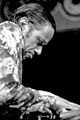
Bobby Womack Dies at 70
American Soul singer Bobby Womack has died.
He started his career in the city Cleveland in the 1950s in a gospel group with his brothers.
In the 1960s, the group recorded on Sam Cooke's label and switched from gospel to secular music.
Womack possessed a distinctive voice and was a powerful songwriter.
He eventually left his brothers and ventured out on his own. His hits included Across 110th Street, If You Think You're Lonely Now, That's The Way I Feel About 'Cha, and Woman's Gotta Have It.
Some of Womack's biggest hits were songs written for other artists, including Wilson Pickett, Aretha Franklin, Joe Tex and Dusty Springfield.
Womack wrote and recorded with this brothers, It's All Over Now which the Rolling Stones covered. The New York Times reports the Stones' version became the group's first number one single in Britain and their first international hit.
Bobby Womack influenced generations of performers and was inducted into the Rock and Roll Hall of Fame in 2009.
He struggled with drugs and health problems for decades and was in the early stages of Alzheimer's disease.
He continued to work and perform after the Alzheimer's diagnosis and in 2012 released his first album in more than a decade.
His website says the 70-year-old Womack was scheduled to start a European tour next month.
When he was inducted in the Rock and Roll Hall of Fame, Womack said "This is just about as exciting to me as being able to see Barack Obama become the first black president of the United States of America."
21 June 2014
Jazz Pioneer Horace Silver Dies
by Richard Paul
Jazz pianist and composer Horace Silver, 85, has died in New Rochelle, New York.
Throughout his remarkable career that began in the 1940s, the pianist, composer and arranger always had one goal in mind.
“I try to make people think with my music,” he said in a long, biographical interview from 1981 with jazz writer and photographer Bob Rosenbaum.
Speaking recently, Rosenbaum recounted the highlights of Silver’s life, which started as the son of an immigrant from Cape Verde.
“He grew up in a musical household," he said. "They used to throw parties for the family - you know - on Saturday afternoons - people would come over and play the music that they grew up with in Cape Verde islands.
While he was successful as a pianist, throughout his career, Silver was most revered as a composer and arranger. His strength was drawing from multiple sources and putting them together in the jazz idiom.
“I've always taken a bit of this and a bit of that and blended it together," Silver said. "In the beginning, and I still do dig the Blues, gospel. I love Latin rhythms. I love Broadway show music. Classical music.”
Silver began playing in clubs in his hometown of Hartford, Connecticut.
“We played for the floor shows -- they had a strip dancer and a comedian and a singer,” he said.
While the setting was less than ideal for the straight-laced Silver, Rosenbaum points out, the clubs had one key benefit.
“They would bring in name players,” he said.
One was saxophonist Stan Getz, who sat in with the house band one night in 1950.
“He just liked Horace’s playing and he said, ‘Would you come on the road with me?’ and then they were on the road half a year,” Rosenbaum said.
After Silver got off the road with Getz, he took to rehearsing during the days at New York’s famous Birdland jazz club, mainly because he didn’t have a piano of his own.
But being at Birdland put him on touch with all the jazz greats of the time and it was there, around 1952 that he met drummer Art Blakey and started one of his most important collaborations, the Jazz Messengers.
“It was really Horace who created the Jazz Messengers," Rosenbaum said. "His presence enabled the establishment of of the Jazz Messengers. They had a very, very together balanced sound. It created a unit of sound which didn't exist before -- actually, taking the idea of be-bop which is melodically very exciting and rhythmically very exciting and adding a front line to it - of horn players - and making it more of an orchestrated sound.”
Working with the Jazz Messengers connected Silver with the legendary jazz label Blue Note Records, which would be his musical home for the next 25 years.
But Silver’s time at Blue Note ended in disappointment. He left the iconic label and struck out on his own.
Creating his own record labels, Silver dove headlong into music that made people think. He created a trilogy of experimental compositions with voices and unusual combinations of instruments, and in 1981, he collaborated with Bill Cosby on a record for kids called “Guides to Growing Up.”
“I think he felt deep inside that it wasn’t just about improvising in clubs and making people happy for an evening, but that he really had something to say with his music,” said Rosenbaum.
And he wanted those messages - above all - to last.
“To try to write music, and record it, perform it in such a manner that it will withstand the test of time,” said Silver.

29 May 2014
New York City’s Harlem Mourns, Cherishes Maya Angelou
by Adam Phillips
Poet, author and human rights activist Maya Angelou, who died Wednesday at the age of 86, was considered by many a literary giant. But to residents of Harlem, a largely African American New York neighborhood where she sometimes lived, the author of “Why The Caged Bird Sings” and other works is especially mourned.
While Maya Angelou received dozens of awards and honorary degrees, she came from the humblest of beginnings in the racially segregated South - having worked as a streetcar conductor, fry cook and calypso performer among other jobs during her youth.
On a city bus riding through Harlem, Rayna Clay-Cuffee remembered Angelou from a half century ago, when they were both nightclub singers.
"And then the years went by, and then I was there when she spoke at the inauguration for [President] Clinton," she said. "So she’s been around a long time. She’s a wonderful woman, extremely intelligent, and she used her intelligence for the world."
Joanathan, who also was riding the bus, admired Angelou for her wisdom and compassion. He said that while her writing often expressed the challenges she and other African Americans faced in their struggle for equality, she felt an underlying bond to all peoples.
“And they can coexist in one. People always make the mistake of saying ‘that race did that’ or ‘that one ain’t no good.’ But we are one human race. And that’s what she understood," said Joanathan.
On 125th Street, Harlem’s busy main thoroughfare, “Lord Harrison,” a hip hop artist, sold his CDs to passersby. He credited Maya Angelou’s poetry and public acclaim with helping to pioneer his musical genre.
“She paved the way! Without her doing her thing and opening the way and ‘bustin’ with the moves,’ as we like to say, hip hop wouldn’t be invented. It wouldn’t have happened. She did it! She is a true American icon," he said.
Nearby, the marquee of the famed Apollo Theater, where the Jackson Five, James Brown, Aretha Franklin and other stars played, noted in big black letters Maya Angelou's passing.
In-house historian Billy Mitchell, who has worked there for 49 years, remembers meeting her.
“What a regal lady she was! Very graceful. That beautiful smile. ‘How are you, young man?’ I could have melted right there," he said. "Because I meet so many people here and there are just a few that really make me feel a little strange and giddy and groupie-like. And she was one of those people that did that for me, absolutely. "We all adored Maya. Her words made us feel proud. She understood our struggle. She understood what it was like to be poor and to be hungry and she made something of herself. Young kids are still reciting her poetry: ‘and still I rise. I rise. I rise.'"
Plans for Maya Angelou’s funeral have not been released.
20 April 2014
Boxer 'Hurricane' Carter Dead at 76
Well-known former U.S. professional boxer Rubin "Hurricane'' Carter has died in his adopted home of Toronto, Canada, from prostate cancer at age 76.
Carter's wrongful murder conviction became an international symbol of racial injustice. The African-American spent 19 years in prison for the 1966 murders of three white people at a tavern in the eastern U.S. state of New Jersey.
Carter and another man, John Artis, were convicted by an all-white jury, largely on the testimony of two thieves who later recanted their stories.
His ordeal and the alleged racial motivations behind it were publicized in Bob Dylan's 1975 song “Hurricane,'” several books and the 1999 film “Hurricane” starring Denzel Washington, who received an Academy Award nomination for playing the boxer-turned-prisoner.
According to Canadian media, Carter, who was from New Jersey, had lived in Toronto since his 1985 prison release, which was aided by a group of Canadian activists. But many had spoken out on Carter's behalf, including former world boxing champion Muhammad Ali.
The U.S. District Court judge who oversaw his release wrote that Carter's prosecution had been "predicated upon an appeal to racism rather than reason, and concealment rather than disclosure."
11 March 2014
Afghanistan's First Vice President Dies
An Afghan government spokesman says one of the country's two vice presidents, Field Marshal Mohammad Qasim Fahim, has died at the age of 57.
The official said Fahim died of natural causes on Sunday. He added that three days of national mourning would be held.
Fahim was once a powerful warlord and had been a leading commander in the Northern Alliance, which fought the Taliban.
The official said Fahim died of natural causes on Sunday. He added that three days of national mourning would be held.
Fahim was once a powerful warlord and had been a leading commander in the Northern Alliance, which fought the Taliban.
27 February 2014
Spanish Flamenco Guitar Legend Dies
Spanish guitarist Paco de Lucia, who blended the flamenco sound of his native land with jazz and other genres that attracted a new generation of fans, has died at the age of 66 of an apparent heart attack.
A government official in de Lucia's hometown of Algeciras, Spain says the musician died Tuesday after he fell ill on a beach while with his family in Cancun, Mexico. Algeciras will observe several days of official mourning in is memory.
De Lucia began his career as a teenager in the 1960s when he formed a popular duo with the late flamenco singer Camaron de la Isla, a pairing that launched the New Flamenco movement. He later joined forces with American jazz guitarists John McLaughlin and Al di Meola, producing the best-selling 1981 album "Friday Night in San Francisco."
De Lucia was awarded his country's prestigious Asturius Prize for the Arts in 2004.
Labels:
66,
flamenco,
guitarist,
heart attack,
Lucía,
Paco,
Paco de Lucía,
Spanish
13 February 2014
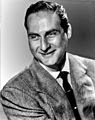
Pioneering TV Comedian Sid Caesar Dies at 91
Pioneering U.S. television comedian Sid Caesar, who set the standard for TV comedy in the early 1950s, has died at 91.
The New York born-Caesar began his career as a big band saxophonist before moving into nightclubs and the Broadway stage.
He started his television career in 1949 when he partnered with the late comedienne Imogene Coca.
Their legendary series Your Show of Shows was must-see Saturday night viewing and attracted huge audiences. Caesar rejected typical TV slapstick and in favor of sketches that showcased the best and sometimes worst of human behavior -- ill-tempered bosses, angry husbands, life in suburbia, and pretentious professors.
Your Show of Shows also parodied foreign films to highlight Caesar's ability to speak in realistic-sounding Russian, Japanese, and French dialect which was actually gibberish and nonsense.
The writing staff of Your Show of Shows and Caesar's subsequent series reads like a "who's who" of American comedy. They include Mel Brooks, Woody Allen, Neil Simon, and Larry Gelbart.
After television, Caesar returned to Broadway and films and wrote candidly about his battles with alcoholism and drug abuse in an 1982 autobiography.
Subscribe to:
Posts (Atom)